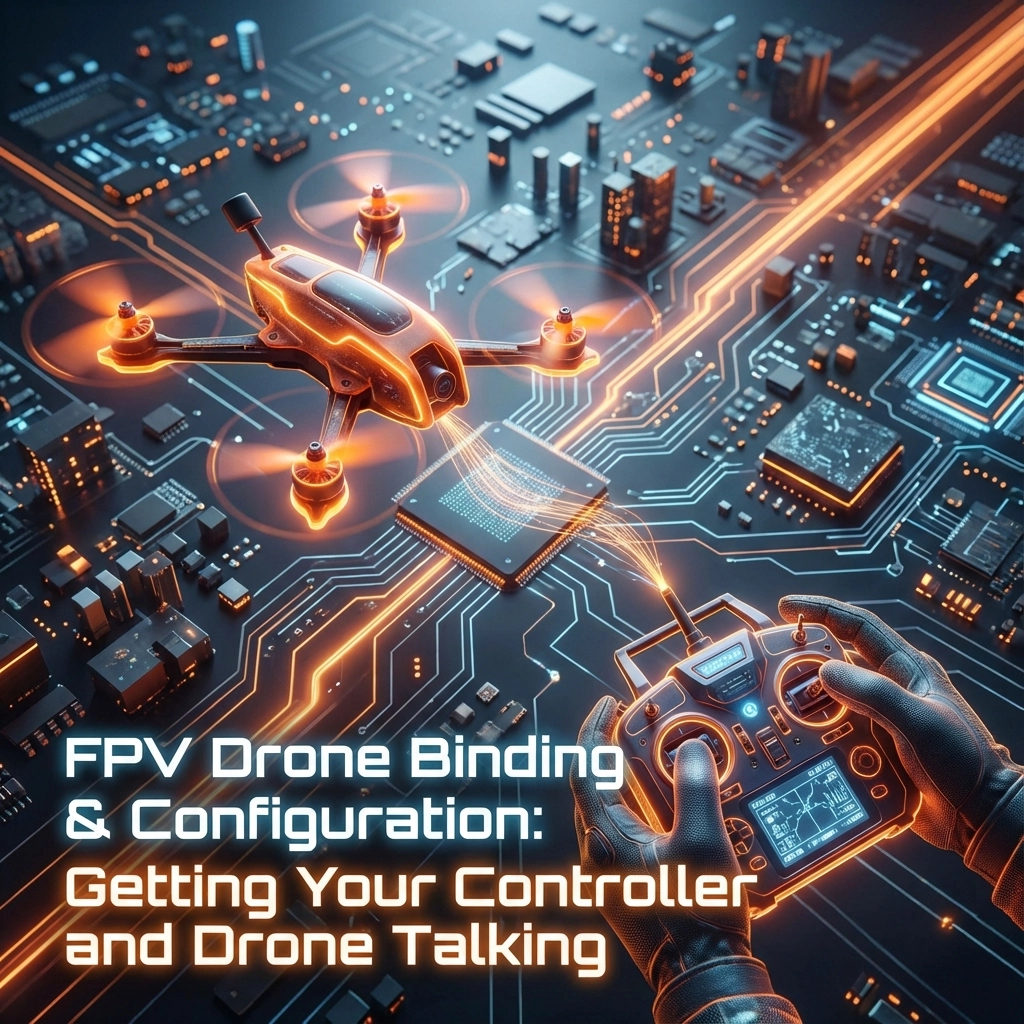
Picture this: You’ve just assembled your first FPV drone. Every component is perfectly in place, your goggles are charged, and you’re ready to experience the freedom of flight. You flip the switch on your transmitter, arm your drone… and nothing happens. Your sticks move, but your quad sits there like a paperweight. Welcome to the world of fpv drone binding : the invisible handshake that transforms scattered components into a symphony of flight.
Don’t worry. Every FPV pilot has been exactly where you are right now. That moment of confusion when technology seems to mock your excitement is actually your gateway to understanding one of the most fundamental aspects of fpv drone setup. Today, we’re going to turn that frustration into mastery.
What is FPV Drone Binding and Why Does It Matter?
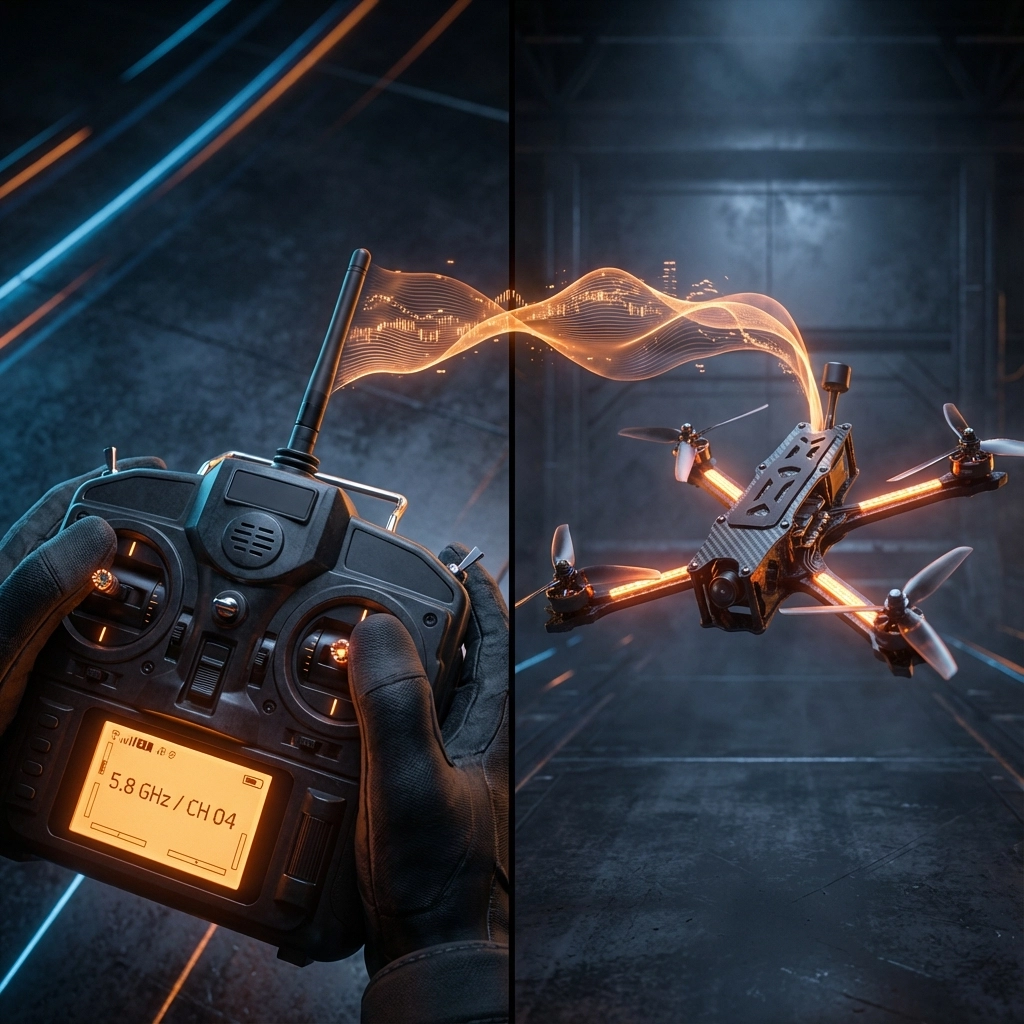
Binding is the secure communication link between your transmitter and your drone’s receiver : think of it as teaching your drone to recognize and respond only to your voice in a crowded room. Without this digital handshake, your quad has no idea that those stick movements on your controller are meant for it.
At its core, every FPV control system has three critical components: your handheld transmitter (TX) sending commands, the receiver module (RX) on your drone receiving those signals, and a communication protocol defining how they talk to each other. Binding ensures your receiver knows it should listen exclusively to your transmitter, preventing interference from other pilots and creating that magical moment when your inputs translate into flight.
This process isn’t just technical necessity : it’s the foundation of trust between pilot and machine. Once bound correctly, your drone becomes an extension of your will, responding instantly to every subtle stick movement with precision that would make fighter pilots jealous.
Pre-Binding Preparation: Setting Yourself Up for Success
Before diving into binding, proper preparation prevents hours of fpv troubleshooting later. Think of this as your pre-flight checklist for the digital realm.
Firmware Compatibility Check: Your transmitter and receiver must speak the same language version. Mismatched firmware is like trying to have a conversation in different dialects : technically the same language, but full of miscommunication. Always update both devices to the latest compatible firmware before attempting to bind.
Power and Module Verification: Ensure your transmitter module is correctly installed and receiving power. A loose module connection is often the culprit behind binding failures that leave pilots scratching their heads for hours.
Protocol Confirmation: Verify that your transmitter and receiver are using the same protocol (ELRS, Crossfire, FrSky, etc.). This seems obvious, but in the excitement of building, it’s easy to overlook this fundamental requirement.
The Universal Binding Process: Your Step-by-Step Guide
While specific steps vary by protocol, the fundamental binding process follows a universal pattern that every FPV pilot should master:
Step 1: Enter Transmitter Binding Mode
Navigate to your transmitter’s bind function. On most radios, this involves accessing the model setup menu and selecting “Bind” or a similar option. Your transmitter’s display should indicate it’s actively searching for a receiver to pair with.
Step 2: Activate Receiver Binding Mode
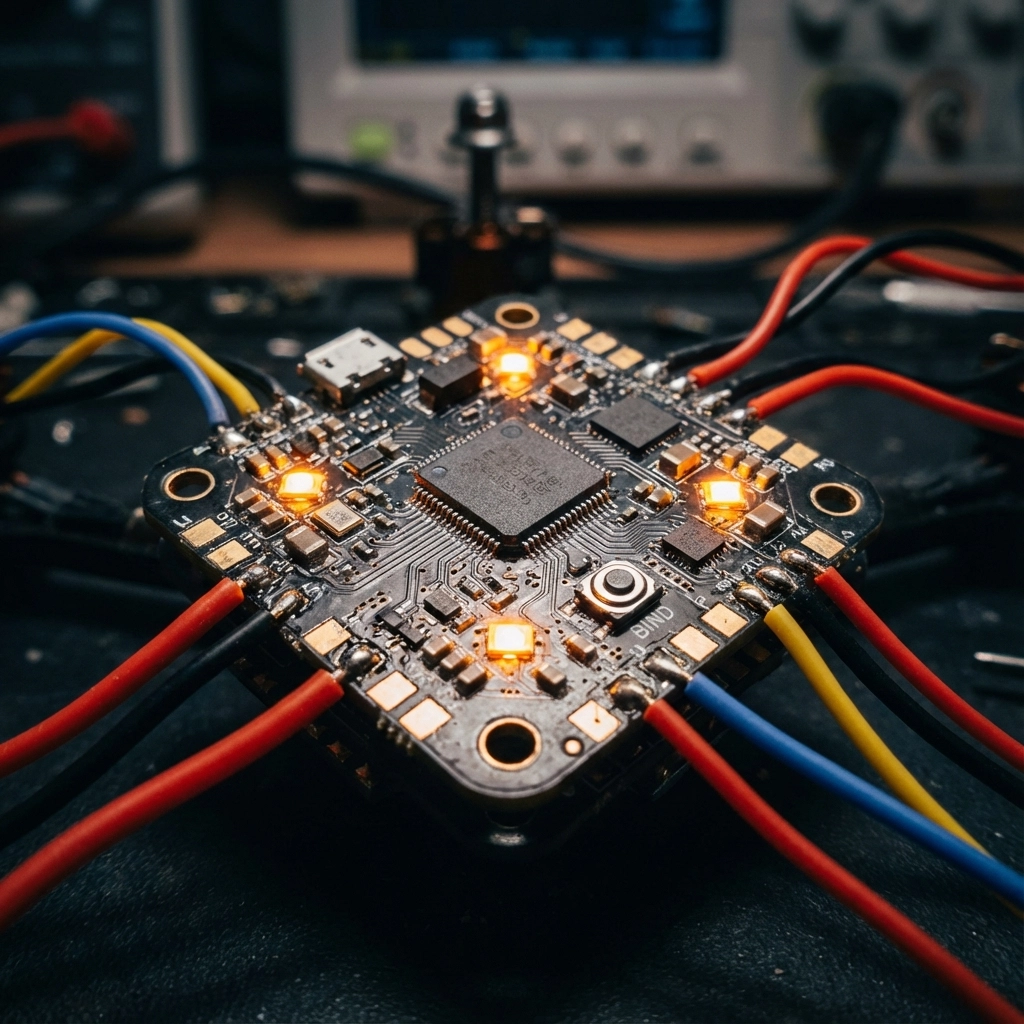
Locate the small bind button on your receiver (usually a tiny button on the flight controller board). With your drone unpowered, press and hold this button while connecting a battery. The receiver LED should begin blinking rapidly, indicating it’s ready to accept a binding request.
Step 3: Complete the Handshake
With both devices in binding mode, they’ll automatically discover each other and establish the connection. You’ll see confirmation on your transmitter display, and the receiver LED will change from rapid blinking to solid or slow blinking.
Step 4: Verify Connection
Move your transmitter sticks and confirm that your flight controller recognizes the inputs. This verification step catches binding issues before they become flight failures.
Protocol-Specific Mastery: ELRS, Crossfire, and Beyond
ExpressLRS (ELRS) Binding
ELRS has revolutionized fpv drone setup with its unique binding approach. Instead of physical buttons, power cycle your receiver three times quickly by unplugging and reconnecting the battery. The LED will blink rapidly when in binding mode. Then activate bind mode through your radio’s Lua script interface. This method eliminates the need to access tiny buttons on cramped flight controllers.
TBS Crossfire Protocol
Crossfire maintains the traditional binding approach but with enhanced reliability. Enter binding mode on your transmitter through the Crossfire Lua script, then press the bind button on your receiver while powering up. Crossfire’s robust protocol often succeeds where other systems struggle in challenging RF environments.
FrSky Systems
FrSky receivers typically require holding the F/S button while powering up the receiver, then initiating bind mode on the transmitter. The process is straightforward but timing-sensitive : hold the button too long or too short, and the binding attempt will fail.
Betaflight Configuration: Where Binding Meets Flight
Successful binding is only half the battle. Your flight controller needs proper configuration to interpret those receiver signals correctly. This is where many beginners encounter their first major fpv troubleshooting challenge.
Connect your drone to Betaflight Configurator and navigate to the Receiver tab. Here, you’ll configure:
Channel Mapping: Ensure your stick movements correspond to the correct flight functions (throttle, pitch, roll, yaw). Incorrect mapping can result in dangerous control reversal or unexpected behavior.
Channel Range: Set appropriate minimum and maximum values for each channel. Most systems use 1000-2000 microseconds, but some protocols require different ranges.
Failsafe Configuration: Program what your drone should do if it loses connection with your transmitter. Proper failsafe settings can save your quad from flyaways and crashes.
Common Binding Errors and Professional Troubleshooting
Even with perfect preparation, binding issues can arise. Understanding these common problems transforms frustrating troubleshooting sessions into quick fixes:
Firmware Mismatch: The most frequent culprit behind binding failures. Always verify firmware compatibility before assuming hardware issues.
RF Interference: Other 2.4GHz devices (WiFi routers, phones, microwaves) can disrupt binding attempts. Move to a different location or power down interfering devices.
Hardware Compatibility: Not all receivers work with all transmitter modules. Research compatibility before purchasing to avoid expensive learning experiences.
Timing Issues: Some protocols require precise timing during the binding process. Practice the sequence a few times to develop muscle memory.
Power Supply Problems: Insufficient or unstable power can prevent successful binding. Ensure your battery is fully charged and capable of supplying adequate current.
Advanced Configuration: Unlocking Peak Performance
Once basic binding succeeds, advanced configuration separates novice pilots from experts:
Telemetry Setup: Configure bidirectional communication to receive battery voltage, RSSI, and other critical flight data on your transmitter.
Model Matching: For pilots with multiple drones, proper model matching prevents accidentally binding to the wrong aircraft.
Range Testing: Perform range tests to verify your binding maintains reliable communication at expected distances.
When to Seek Professional FPV Drone Support
While binding is fundamentally a DIY process, certain situations warrant professional assistance. Complex multi-protocol setups, custom firmware configurations, or persistent binding failures might require expert intervention.
TechInMotion360’s FPV Drone Support Package eliminates the guesswork from challenging binding scenarios. Our team has resolved binding issues across every major protocol and hardware combination, turning hours of frustration into minutes of expert troubleshooting.
Whether you’re struggling with your first binding attempt or optimizing an advanced racing setup, professional support ensures you spend more time flying and less time debugging. Sometimes the most efficient path to the sky involves admitting when expert help can accelerate your journey.
The Path Forward: From Binding to Soaring
Mastering FPV drone binding isn’t just about getting your controller and drone to communicate : it’s about understanding the digital foundation that makes aerial freedom possible. Every successful binding represents a small victory over complexity, a step closer to that moment when technology disappears and pure flight remains.
Remember, every expert was once a beginner who refused to give up when the binding failed for the tenth time. That persistence, that determination to master each fundamental step, is what separates pilots who occasionally fly from those who truly soar.
Your journey from confused beginner to confident pilot starts with this digital handshake. Master the binding process, understand the underlying principles, and you’ll have built the foundation for every aerial adventure that follows. The sky isn’t just calling : it’s waiting for you to answer with perfectly bound precision.
Leave a comment