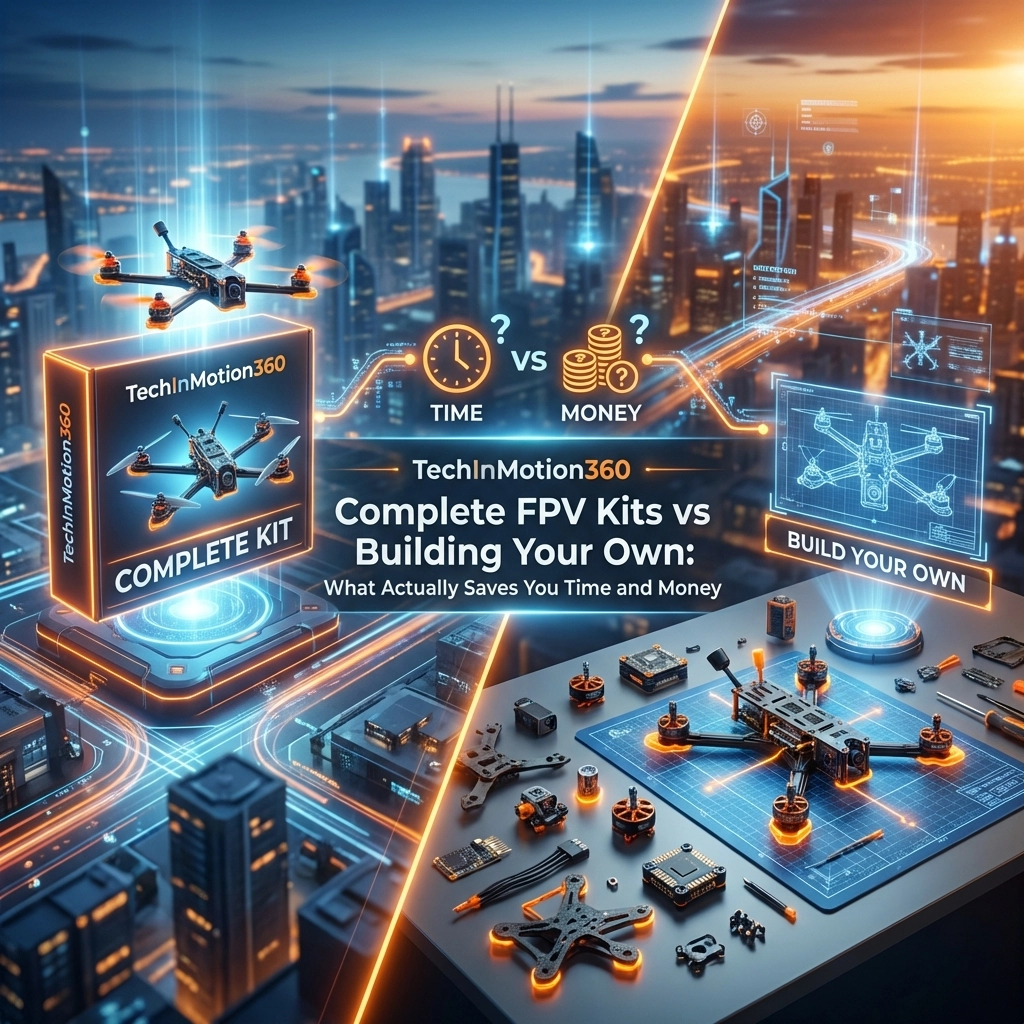
So you’ve decided to get into FPV drones. Awesome choice. But now you’re staring down two very different paths: grab a complete kit that’s ready to fly, or source every single component yourself and build from scratch.
Both options have their place. But which one actually makes sense for your situation, your budget, and your sanity? Let’s break it down with real numbers, real time estimates, and zero fluff.
The DIY Dream vs. The DIY Reality
Building your own FPV drone sounds incredible on paper. You get to handpick every component, customize everything to your exact specifications, and learn the system inside and out. There’s a certain pride that comes with flying something you assembled from bare parts.
But here’s what nobody tells you upfront: the hidden costs add up fast, and the time investment can be brutal: especially if you’re new to the hobby.
When you build from scratch, you’re not just buying parts. You’re buying the education that comes with figuring out which parts actually work together. And that education often comes in the form of expensive mistakes.
Breaking Down the Real Costs
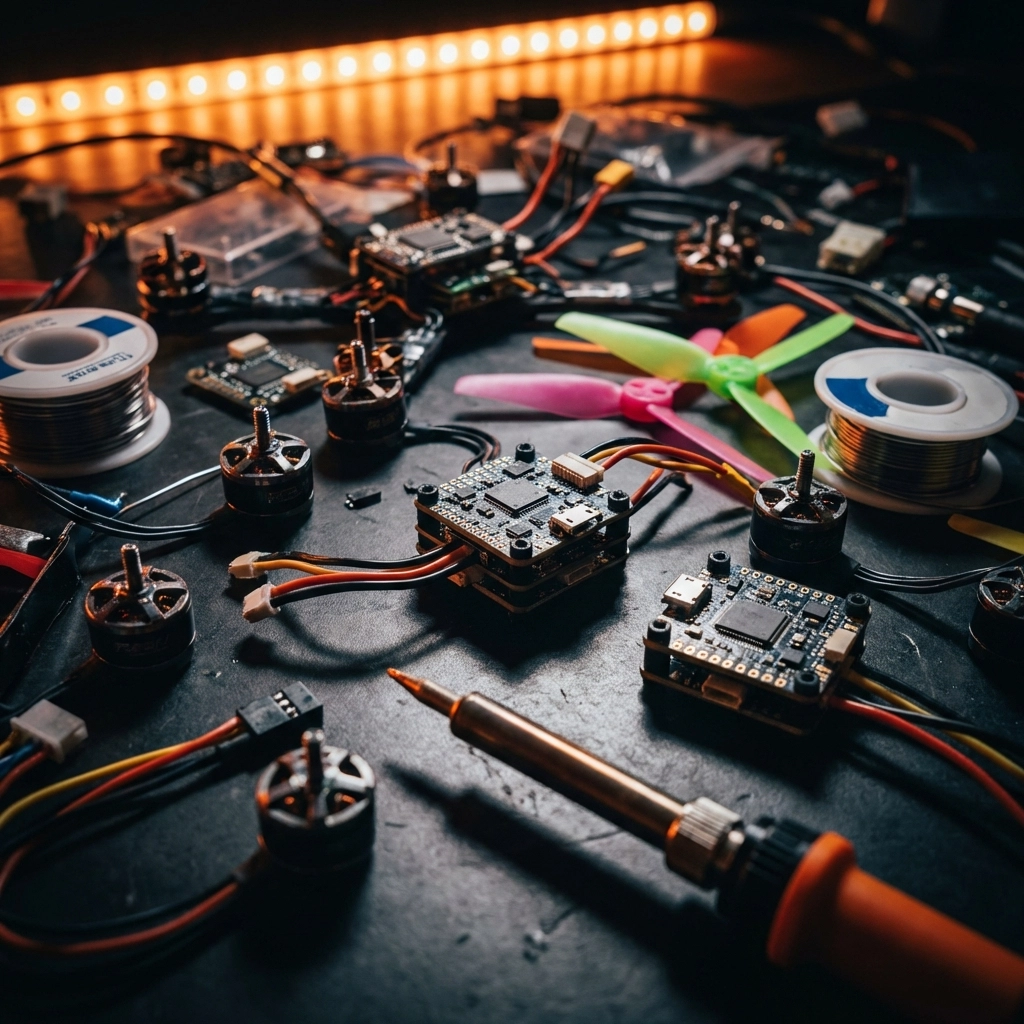
Let’s get into the numbers. A typical DIY FPV build requires:
- Frame: $30–$80
- Flight controller: $40–$100
- ESC (Electronic Speed Controller): $40–$80
- Motors (4x): $60–$120
- Propellers: $10–$25
- Camera: $25–$60
- Video transmitter: $30–$70
- Receiver: $25–$50
- Antennas: $15–$40
- Wiring, hardware, zip ties: $20–$40
That’s roughly $295–$665 just for the drone itself. Now add goggles ($150–$600), a radio transmitter ($80–$300), batteries ($25–$50 each, and you’ll want at least 4), and a charger ($40–$100).
Your “budget build” just became a $700–$1,500+ investment. And we haven’t even factored in the tools you might need: soldering iron, hex drivers, multimeter, heat shrink, and more.
With a complete kit from TechInMotion360’s DJI BNF/PNP collection, you’re getting matched components that are tested to work together, often at a comparable or better price point: minus the headaches.
The Time Factor: Hours vs. Weeks
Here’s where complete kits really shine. A beginner building their first FPV drone from scratch should budget:
- Research time: 10–20 hours (watching tutorials, reading forums, comparing parts)
- Ordering and waiting: 1–3 weeks (especially if ordering from multiple suppliers)
- Assembly time: 4–10 hours (assuming everything goes right)
- Troubleshooting: 2–10+ hours (because something always goes wrong the first time)
We’re talking potentially 40+ hours before you even take your first flight. And that’s being optimistic.
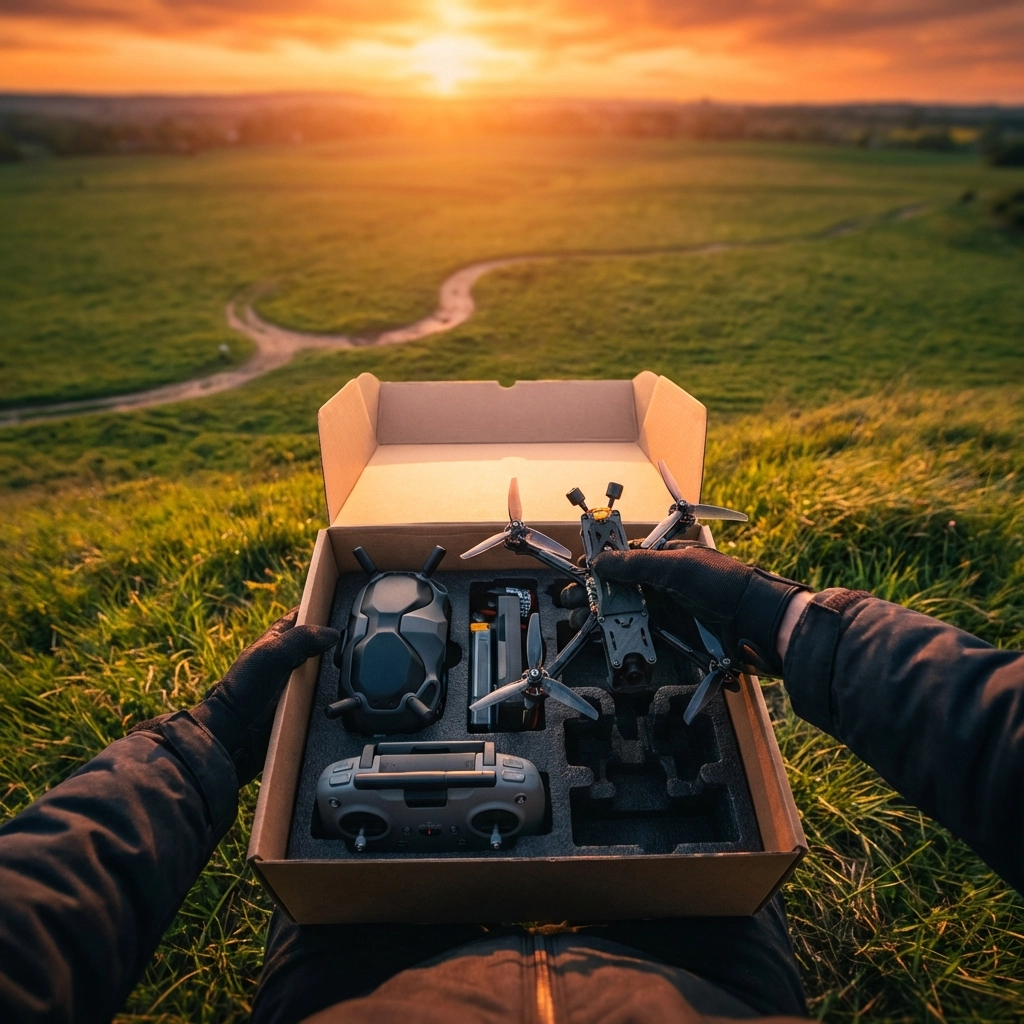
Complete kits? Unbox, charge, bind, fly. Most people are in the air within an hour or two. That’s not an exaggeration: it’s the whole point of a curated kit.
The Compatibility Nightmare
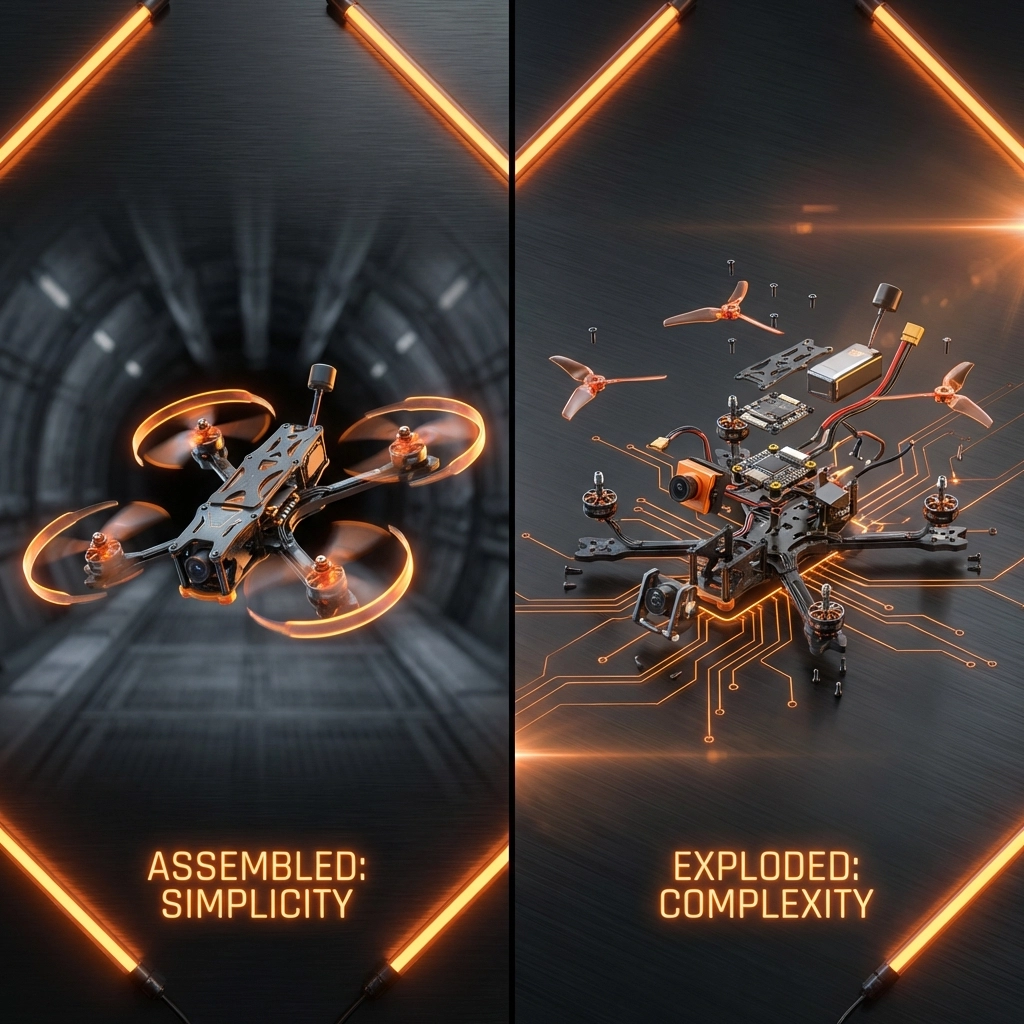
This is the thing that catches most DIY builders off guard. FPV components aren’t universally compatible. You need to verify:
- Firmware compatibility between flight controller and ESC
- Voltage requirements across all components
- Physical mounting dimensions
- Protocol matching between receiver and transmitter
- Camera and VTX voltage compatibility
Get any of these wrong, and you’re looking at components that won’t communicate, won’t fit, or worse: magic smoke when you plug in the battery. That $40 flight controller you scored on sale? Useless if it doesn’t play nice with your ESC firmware.
TechInMotion360’s complete kits eliminate this entirely. Every component is selected to work together out of the box. No guesswork, no forum deep-dives trying to figure out why your OSD isn’t showing up.
The Learning Curve Consideration
“But I want to learn how everything works!”
Fair point. Understanding your drone’s systems makes you a better pilot and gives you the ability to repair and upgrade confidently. There’s genuine value in that knowledge.
Here’s the thing though: you can still learn all of this with a complete kit. The difference is you’re learning while flying instead of learning while troubleshooting why nothing works.
When something eventually breaks (and it will: that’s FPV), you’ll have hands-on repair experience. And when you’re ready to upgrade, services like the FPV Drone Performance Upgrade Package or Power System Upgrades let you level up with confidence.
The Support Difference
Building from scratch means you’re on your own. When something doesn’t work, you’re hitting Reddit, Facebook groups, and manufacturer support (good luck with that last one). You might get helpful advice. You might get conflicting opinions. You’ll definitely spend hours searching.
Complete kits from TechInMotion360 come with something DIY builds don’t: actual support from people who know the exact configuration you’re flying.
The Annual Remote Support Plan gives you a full year of expert assistance. Got a weird issue? Someone who knows your setup can help diagnose it. Need performance tuning? The Advanced Support Package has you covered.
That’s not a luxury: it’s a massive time-saver that actually accelerates your learning.
When DIY Actually Makes Sense
Let’s be fair. There are situations where building from scratch is the right call:
- You’re an experienced builder who already knows component compatibility inside and out
- You have very specific requirements that no pre-built kit addresses
- You genuinely enjoy the building process as much as flying
- You have the tools, time, and troubleshooting patience already
For these pilots, DIY is rewarding. The process is part of the hobby for them.
But if you’re trying to fly as soon as possible, minimize frustration, and avoid expensive compatibility mistakes? Complete kits win every time.
The Real Cost of “Saving Money”
Here’s the math nobody does upfront:
That DIY build that’s “$100 cheaper” on paper? Add in the wrong ESC you bought because the listing was confusing ($45). The frame that didn’t fit your motors ($35). The camera you fried because of a voltage mismatch ($50). The two weeks of evenings spent troubleshooting instead of flying.
Suddenly your savings evaporated: and you lost time you’re never getting back.
Complete kits from TechInMotion360 aren’t just about convenience. They’re about predictable outcomes. You know what you’re getting, you know it works, and you know someone has your back if something goes sideways.
Making the Right Choice
If you’re new to FPV, the answer is pretty clear: start with a complete kit. Get flying, build your skills, and learn the systems through actual flight experience. When you’re ready to go deeper, upgrade paths and maintenance support are waiting.
If you’re experienced and want a custom build, go for it. You know the risks, you have the skills, and you’re prepared for the process.
For everyone else? Save your time, protect your budget, and start your FPV journey with components that actually work together. Your future self: the one who’s out flying instead of debugging firmware: will thank you.
Ready to Start Flying?
Check out TechInMotion360’s complete FPV drone options and find a kit that matches your goals. And if you ever need help along the way, troubleshooting support is just a click away.
The sky’s waiting. Let’s get you there the smart way.
Leave a comment