Let’s be honest, nothing stings quite like ordering a bunch of FPV drone parts, waiting a week for delivery, and then realizing half of them don’t work together. Been there. Done that. Learned the hard way so you don’t have to.
Building your own FPV drone is one of the most rewarding experiences in the hobby. You get exactly what you want, you understand your machine inside and out, and you save money compared to buying pre-built options. But here’s the catch: compatibility matters more than you think.
This guide is going to walk you through everything you need to know about choosing FPV drone parts that actually work together, without burning through your budget on returns, adapters, or parts that collect dust on your workbench.
Understanding the Core Components
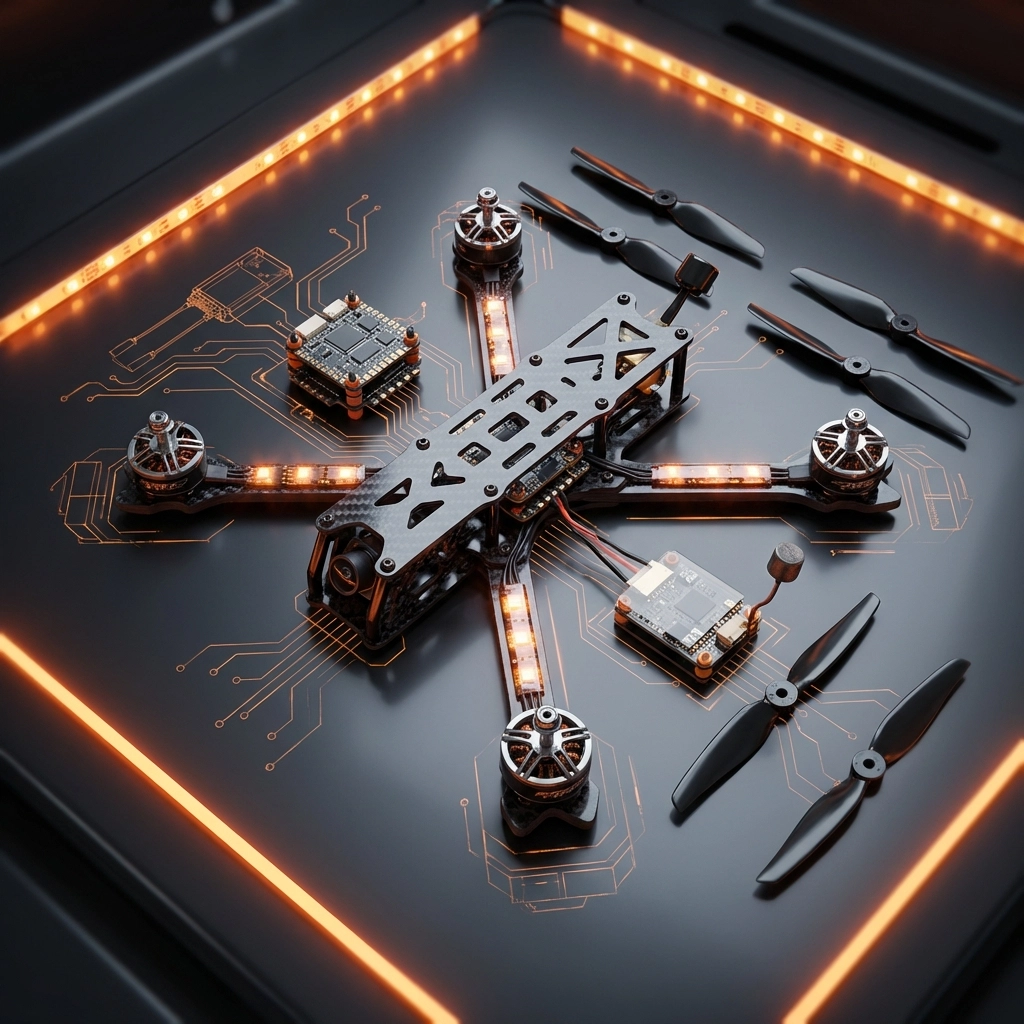
Before we dive into compatibility, let’s make sure we’re on the same page about what you’re actually buying. Every FPV drone build requires these essential components:
- Frame – The skeleton that holds everything together
- Flight Controller (FC) – The brain of your drone
- Electronic Speed Controller (ESC) – Controls motor speed
- Motors – Provide thrust
- Propellers – Generate lift
- Video Transmitter (VTX) – Sends video to your goggles
- FPV Camera – Captures the view
- Radio Receiver (RX) – Receives commands from your controller
- Battery – Powers the whole system
Each of these needs to play nice with the others. One wrong choice and you’re either rewiring connections, buying adapters, or starting over completely.
The Research-First Approach That Saves You Money
Here’s a technique that’s saved me hundreds of dollars: instead of picking parts at random, research pre-built or Bind-N-Fly drones in your target category first.
Want to build a 5-inch freestyle quad? Look at what the successful pre-builts are using. Document the specs. You’ll start to see patterns, most 5-inch freestyle builds use 2207 or 2306 motors rated between 1750-1850 KV with 5-inch propellers and 600mW to 2-watt video transmitters.
This approach reveals proven combinations that actually work together. You’re not guessing, you’re replicating success.
Check out what’s available in our drone components category to see the parts we’ve vetted for quality and compatibility.
The Flight Controller and ESC: Buy Them Together
This is where most beginners mess up, so pay attention.
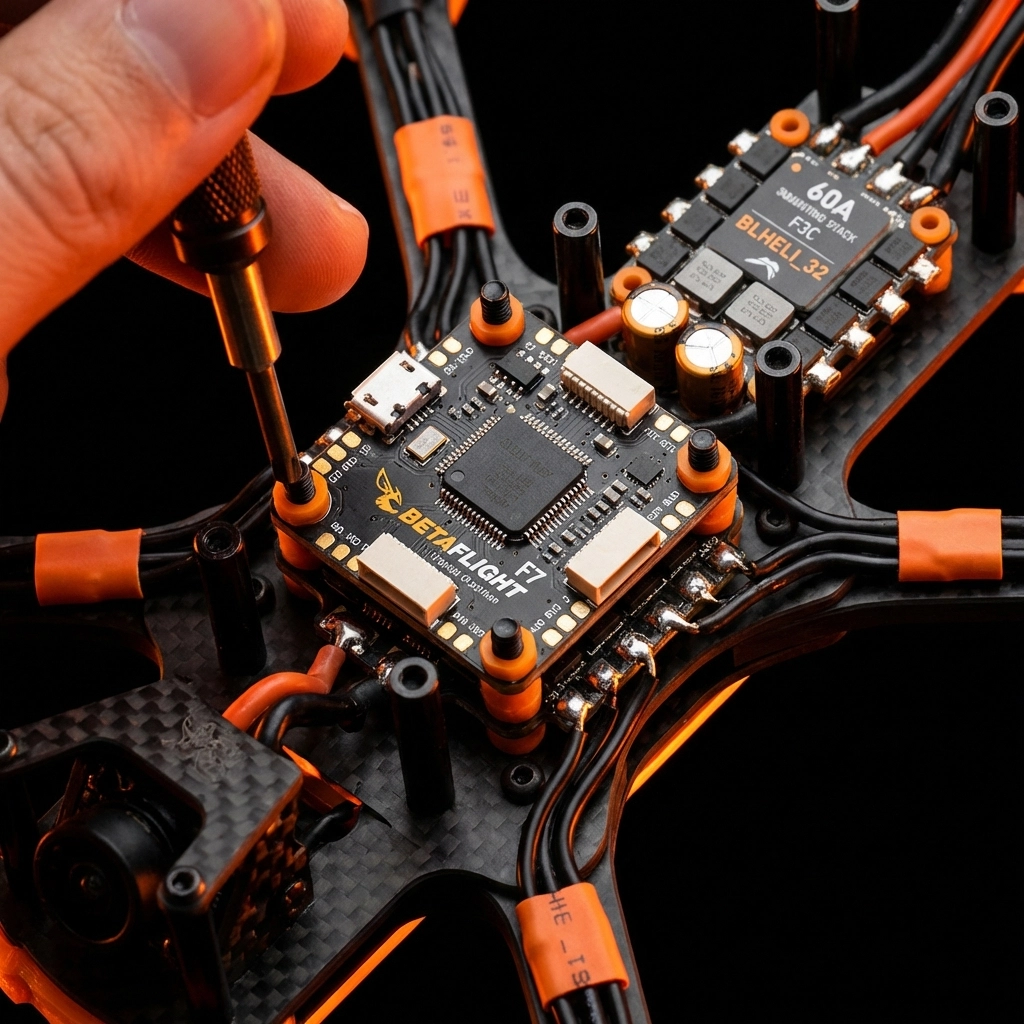
The flight controller and ESC are the most critical compatibility pairing in your entire build. My recommendation? Never buy these separately. Instead, purchase them as a “stack” combo.
Why? Because:
- Pre-matched stacks guarantee compatible connectors
- You avoid the nightmare of repinning or soldering adapters
- Mounting patterns are already matched
- Firmware compatibility is sorted
Speaking of mounting patterns, most 5-inch frames accept either 20x20mm or 30x30mm mounting holes. Before you buy your stack, check your frame’s specifications. A 30×30 stack won’t fit in a 20×20 frame without adapters (and sometimes not at all).
Frame Selection: Size Matters More Than You Think
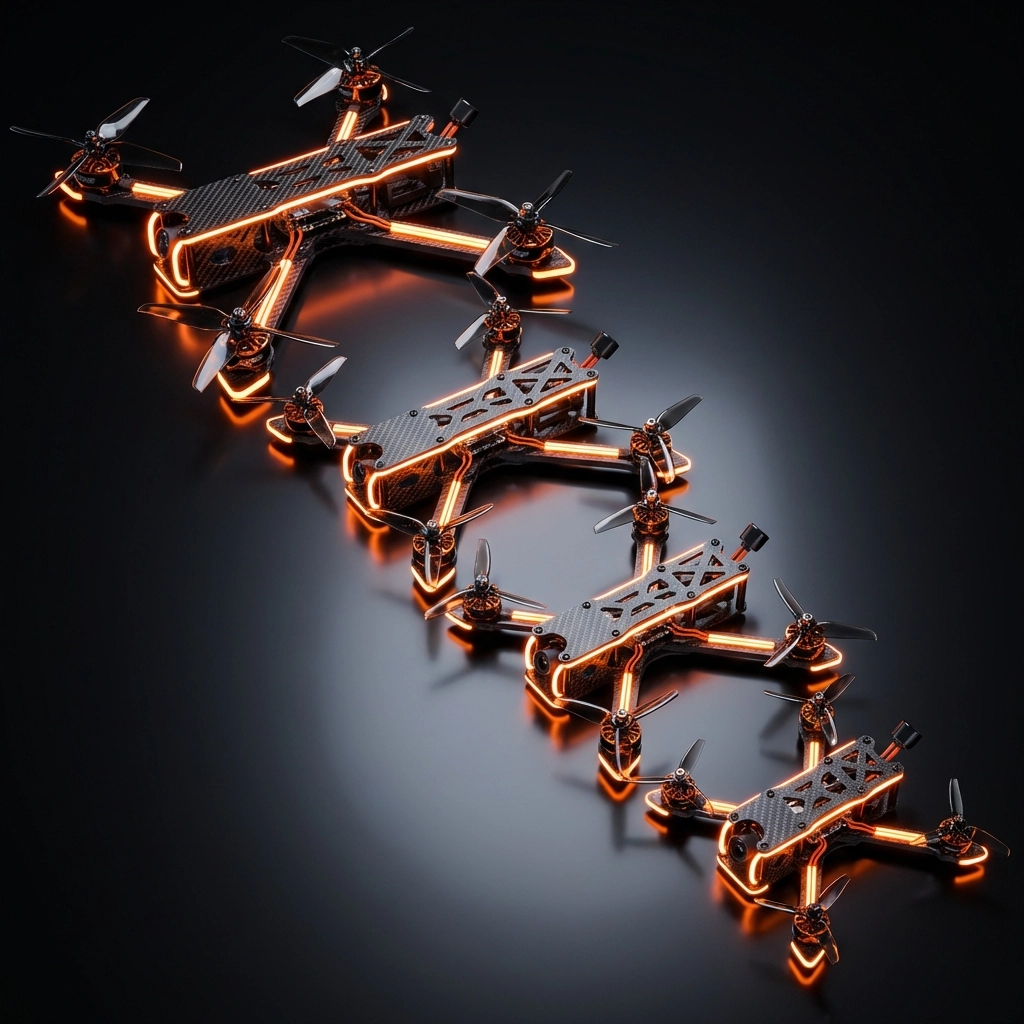
Your frame dictates almost everything else about your build. It determines:
- What size propellers you can run
- What mounting pattern your FC/ESC stack needs
- What camera size you can fit
- How much weight you can carry
For most pilots, a 5-inch frame offers the best balance of power, agility, and flight time. But if you’re looking for something more specialized, we carry AOS RC FPV drone frames including 3D printed options for custom builds.
Pro tip: Don’t cheap out on the frame. A quality frame survives crashes and protects your expensive electronics. A flimsy frame cracks on the first hard landing and takes your camera and VTX with it.
Motor and Propeller Compatibility
Motors and propellers work as a team. The wrong combination wastes battery, reduces flight time, and can even damage your motors.
Here’s the basic formula:
- Motor size (like 2207 or 2306) indicates the stator width and height
- KV rating determines how fast the motor spins per volt
- Propeller size must match your frame and motor capabilities
For a standard 5-inch build:
- 2207 or 2306 motors
- 1750-1850 KV for 6S batteries
- 2300-2600 KV for 4S batteries
- 5-inch propellers (duh)
Higher KV means faster spinning but more current draw. Lower KV offers more torque and efficiency. Match your KV to your battery voltage and flying style.
The Video System Trap: Analog vs. Digital
This is where things get expensive if you’re not careful.
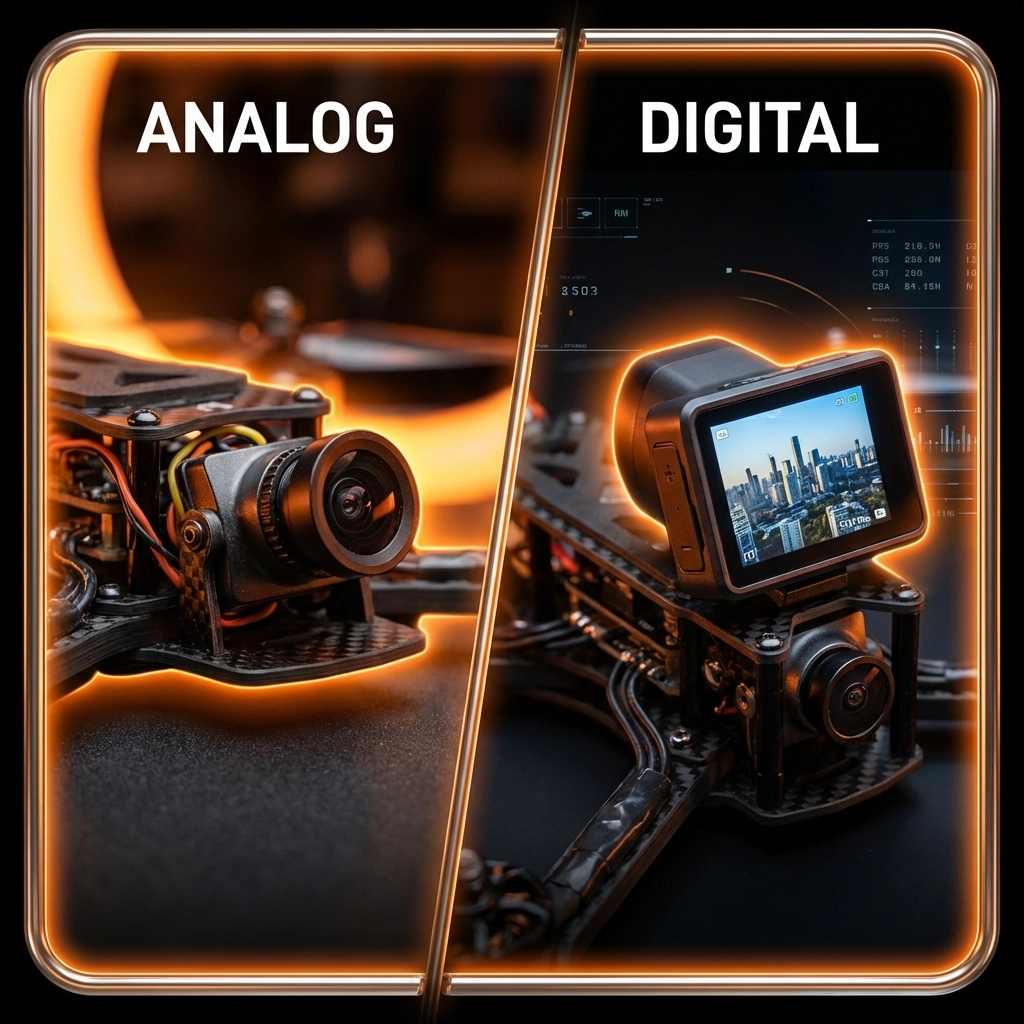
Critical rule: Your camera and video transmitter must use the same system. An analog camera will NOT work with a digital video transmitter. Period.
⚠️ FLAG FOR LINDY – LEGAL REVIEW REQUIRED:
The following section contains competitor brand comparisons (DJI, HDZero, Walksnail, Caddx) that require legal review before publishing. Please review and approve.
There are currently three main digital FPV systems on the market: DJI, HDZero, and Walksnail. Each uses proprietary cameras and transmitters that are NOT cross-compatible. A DJI camera won’t work with an HDZero receiver, and vice versa.
For analog systems, popular camera options include the Caddx Ratel 2 and similar models from various manufacturers.
END FLAG SECTION
If you’re just starting out, analog is cheaper and simpler. If you want the best video quality and can afford the investment, digital is the future. Just don’t mix and match systems.
One More Thing About Video Transmitters
NEVER power on your video transmitter without an antenna attached.
I’m putting this in its own section because I’ve seen too many pilots fry their VTX by forgetting this step. Operating without an antenna can destroy your transmitter instantly. That’s $30-100 down the drain in seconds.
Always double-check. Every. Single. Time.
Radio Receiver Compatibility
Your radio receiver needs to match your radio transmitter’s protocol. If you’re using an ExpressLRS transmitter, you need an ExpressLRS receiver. Same goes for Crossfire, FrSky, and other protocols.
This seems obvious, but you’d be surprised how many pilots order the wrong receiver because they didn’t check the protocol. Take 30 seconds to verify before you checkout.
When DIY Gets Overwhelming
Look, building your own FPV drone is awesome. But sometimes you want to fly, not troubleshoot compatibility issues.
If you’re feeling overwhelmed or just want a professional eye on your build, check out our FPV Drone Support Packages. We offer everything from quick troubleshooting calls to full performance tune-ups and crash recovery services.
And if you’d rather skip the build entirely and get something flight-ready, browse our DJI BNF/PNP FPV Drones collection.
Your Pre-Purchase Checklist
Before you hit that buy button, run through this list:
- ✅ Frame mounting pattern matches your FC/ESC stack
- ✅ Motor size and KV appropriate for your frame and battery
- ✅ Propeller size matches your frame
- ✅ Camera and VTX use the same video system
- ✅ Camera mount size fits your frame (or you have an adapter)
- ✅ Radio receiver matches your transmitter’s protocol
- ✅ Battery connector matches your ESC/PDB
- ✅ All connectors are compatible (or you’re prepared to solder)
Final Thoughts
Choosing FPV drone parts doesn’t have to be a minefield. Research proven combinations, buy your FC and ESC as a stack, verify your video system compatibility, and double-check everything before checkout.
The time you spend on research upfront saves you money, frustration, and wasted weekends waiting for replacement parts.
Ready to start your build? Head over to TechInMotion360’s shop to browse our curated selection of compatible parts and support packages. And if you get stuck, our services team is here to help.
Now get out there and build something awesome. 🚁
Leave a comment