Your FPV drone is more than just a flying machine: it’s an investment in your passion, business, or creative vision. But here’s the reality: without proper maintenance, even the most expensive drone can become a costly paperweight faster than you think. The good news? A simple maintenance routine can dramatically extend your flight time, prevent emergency repairs, and keep you in the air longer.
Think of drone maintenance like caring for a high-performance sports car. You wouldn’t drive a Ferrari without regular oil changes, and you shouldn’t fly your FPV drone without consistent upkeep. The pilots who get thousands of flight hours out of their equipment aren’t just lucky: they follow proven maintenance strategies that we’re about to share.
Battery Management: Your Flight Time Foundation
Your battery pack is the heart of extended flight time, and proper battery care can mean the difference between 8-minute flights and 15-minute adventures. Poor battery maintenance is one of the fastest ways to kill both performance and your wallet.
Always use a balance charger and avoid overcharging: this single practice can extend your battery’s lifespan by months. Overcharging creates heat buildup that permanently damages lithium polymer cells, reducing capacity and creating safety hazards.
For storage between flying sessions, discharge batteries to approximately 50-60% rather than keeping them fully charged. Storing fully charged LiPo batteries for extended periods causes chemical degradation that you can’t reverse. Many pilots store batteries at full charge and wonder why their flight times drop dramatically after a few weeks.
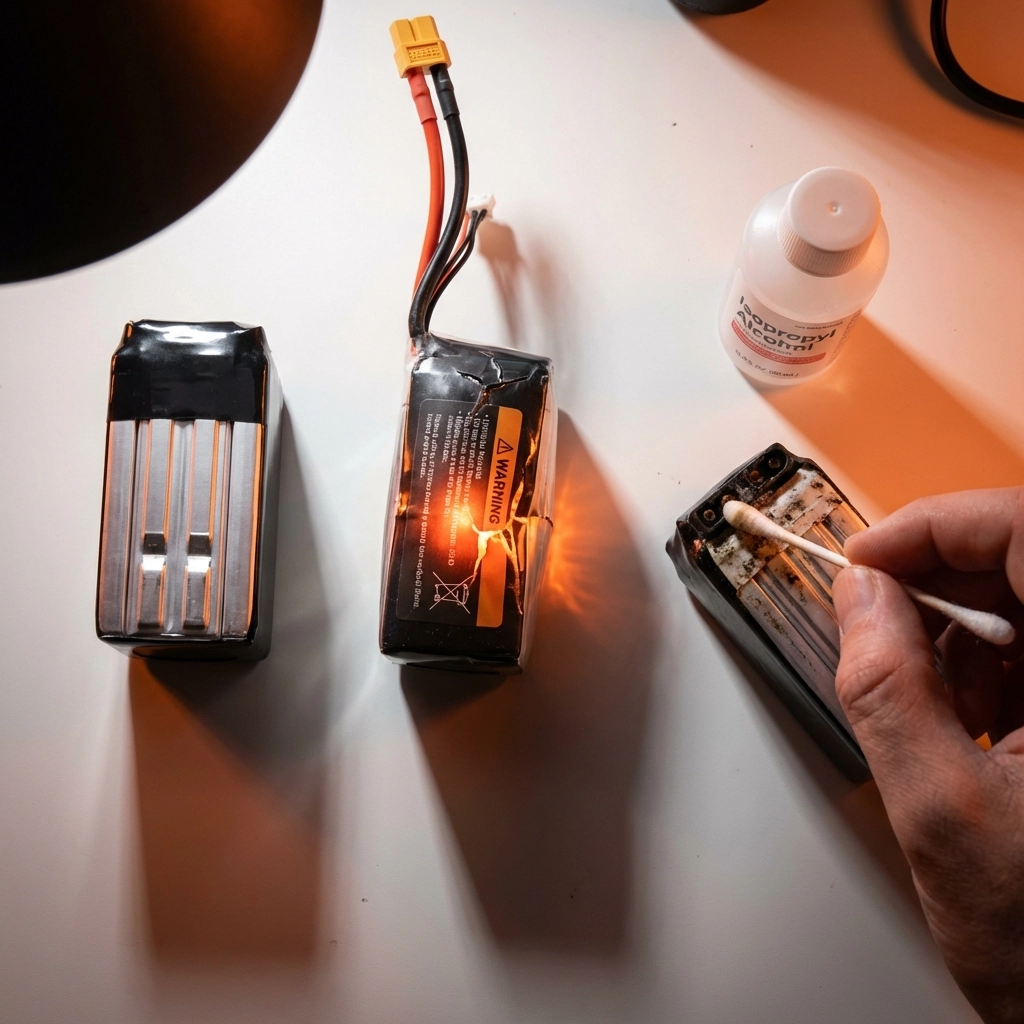
Inspect your batteries before and after every flight for signs of swelling, puffing, leaks, or physical damage. A swollen battery isn’t just performance-limiting: it’s potentially dangerous and should be disposed of immediately through proper recycling channels.
Clean battery contacts regularly using isopropyl alcohol and cotton swabs. Dirty contacts create resistance that reduces power delivery and can cause voltage drops during high-demand maneuvers. This simple 30-second task can prevent unexpected power failures mid-flight.
Pre-Flight Maintenance: Catching Problems Before They Become Emergencies
Smart pilots know that most catastrophic failures start with small problems that could have been caught during inspection. A systematic pre-flight check takes less than five minutes but can save you hundreds in repair costs.
Battery verification goes beyond just checking charge levels. Ensure connections are secure with no wiggle or resistance, verify cell voltages are balanced within 0.1V of each other, and confirm your battery hasn’t suffered any impact damage since your last flight.
Propeller inspection might seem obvious, but it’s where many pilots get careless. Check for hairline cracks that aren’t immediately visible: these can cause catastrophic failure during aggressive maneuvers. Look for chips, bends, or imbalance issues that create vibration and stress other components.
Keep your firmware current with manufacturer updates. These aren’t just feature additions: they often include critical bug fixes and performance optimizations that prevent crashes and improve flight characteristics.
Motor testing should happen with propellers removed. Power up each motor individually and listen for unusual sounds, grinding, or hesitation. A motor that runs roughly on the ground will fail under flight loads.
Post-Flight Care: Protecting Your Investment
What you do immediately after landing determines how well your drone performs on the next flight. Hot motors, dirty components, and undetected damage compound quickly without proper post-flight attention.
Allow motors to cool completely before storage. Extended operation creates thermal stress that shortens motor life, and packing a hot drone can trap moisture and cause corrosion.
Clean thoroughly but smartly: remove dust, dirt, and debris using soft cloths and compressed air. For electronic components, use isopropyl alcohol rather than water, which conducts electricity and can cause short circuits even in small amounts. If something feels off after landing, a Phone/Video Basic Support “Quick Fix Call” ($50) can walk you through a 10-minute checklist before issues snowball.
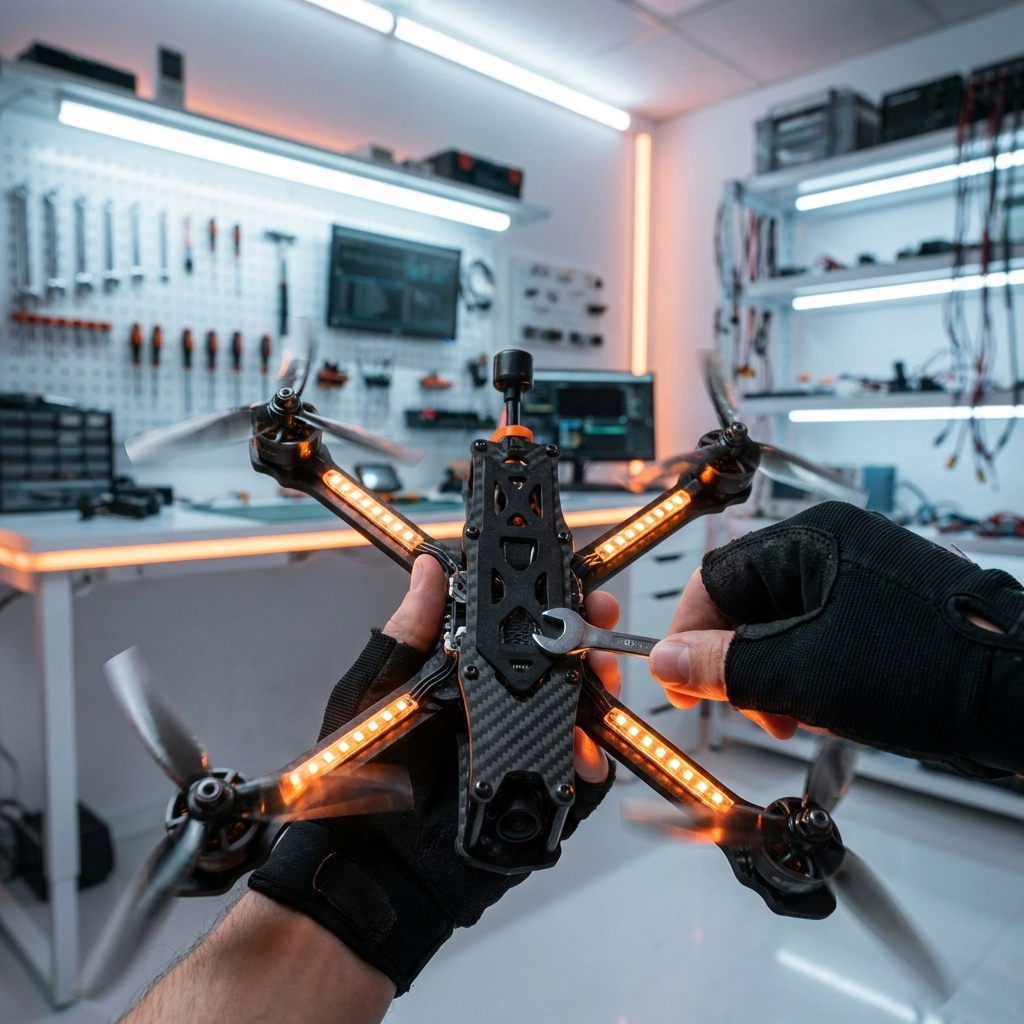
Damage inspection after each flight catches problems while they’re still repairable. Check your frame for new stress fractures, examine the camera gimbal for impact damage, and verify all screws remain properly tightened. Small problems caught early are infinitely cheaper than major failures.
Systematic Maintenance Schedules: The Professional Approach
Professionals don’t maintain equipment randomly: they follow schedules that maximize performance while minimizing downtime. Adopting this approach separates serious pilots from weekend warriors.
Every 2-3 flights, perform light maintenance: blow out dust with compressed air, clean camera lenses, check motor smoothness by spinning them by hand, and inspect the frame for new damage or loose components. If you want a quick pro set of eyes before a session, book a Phone/Video Standard Support “Flight Ready Check” ($75).
Weekly deep cleaning involves removing the battery and accessing hard-to-reach areas. Clean motor bells, check wire connections for fraying, and inspect solder joints for cracks or cold joints that cause intermittent failures. For recurring issues or minor fixes, our FPV Drone Basic Maintenance & Repair ($40-$75) covers cleaning and adjustments, and for deeper tuning use Phone/Video Advanced Support “Performance Tune & Troubleshoot” ($125).
Monthly comprehensive inspection includes checking motor mounting screws (apply thread locker if loose), lubricating bearings with high-speed bearing oil, and testing all electronic systems under load. If you fly often, the Phone/Video Annual Remote Support Plan “Fly with Confidence” ($350) keeps your setup dialed all year.
Motor and Bearing Maintenance: The Performance Engine
Motors are the most expensive components to replace, making their maintenance critical for long-term cost control. Proper motor care can extend their lifespan from hundreds to thousands of flights. When you want smoother footage or more thrust, consider the Performance Upgrade Package ($175-$250) and, for remote tuning, Phone/Video Advanced Support “Performance Tune & Troubleshoot” ($125).
Bearing maintenance involves regular oiling with appropriate high-speed bearing lubricant: never use standard household oils that attract debris and create drag. Clean bearings showing high friction using specialized bearing cleaner or careful WD-40 application followed by proper lubrication.
Motor inspection should catch problems before they cause crashes. Look for burnt windings (indicated by discoloration or burning smells), loose magnets in the motor bell, and chipped or damaged motor shafts that cause vibration.
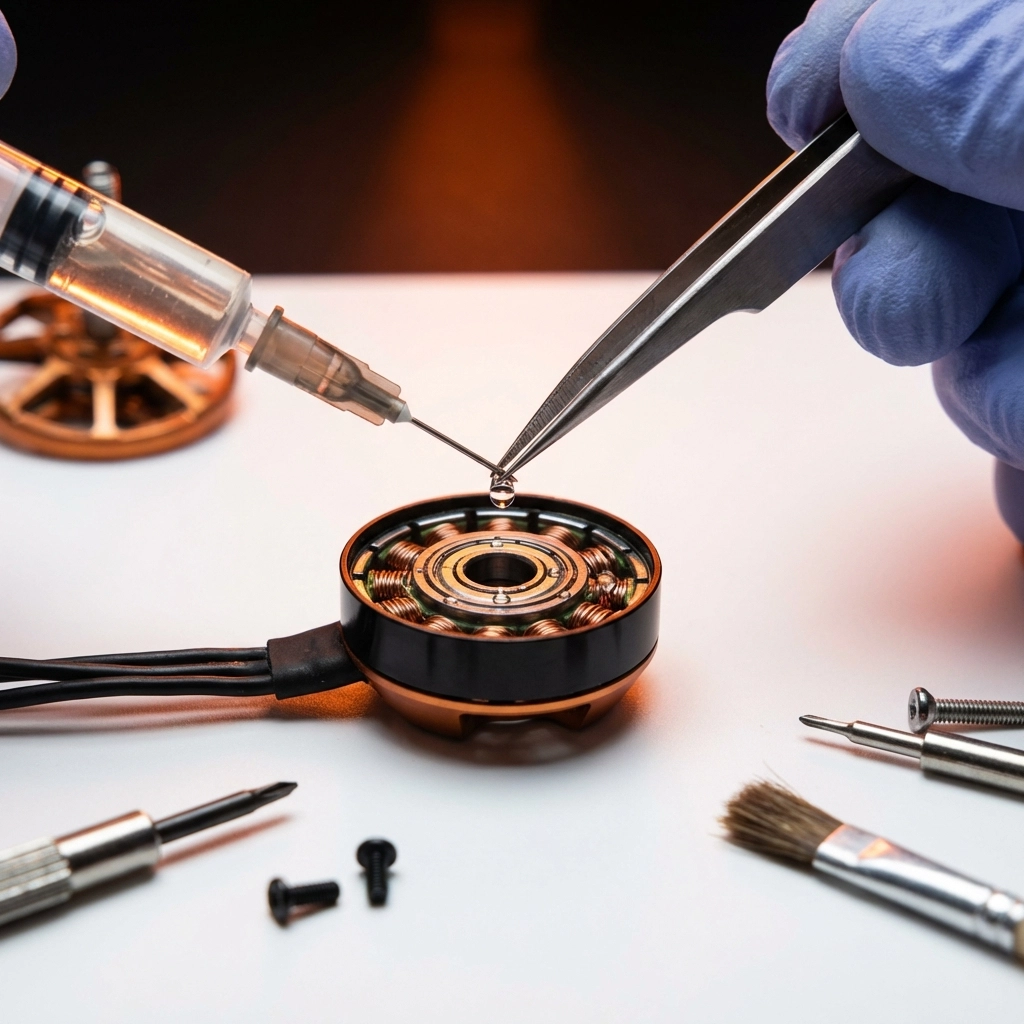
Check that motor screws maintain proper torque: loose screws allow motor movement that damages mounting points and creates electrical connection problems. Over-tightening, however, can crack motor mounting points or strip threads.
Component and Frame Integrity Checks
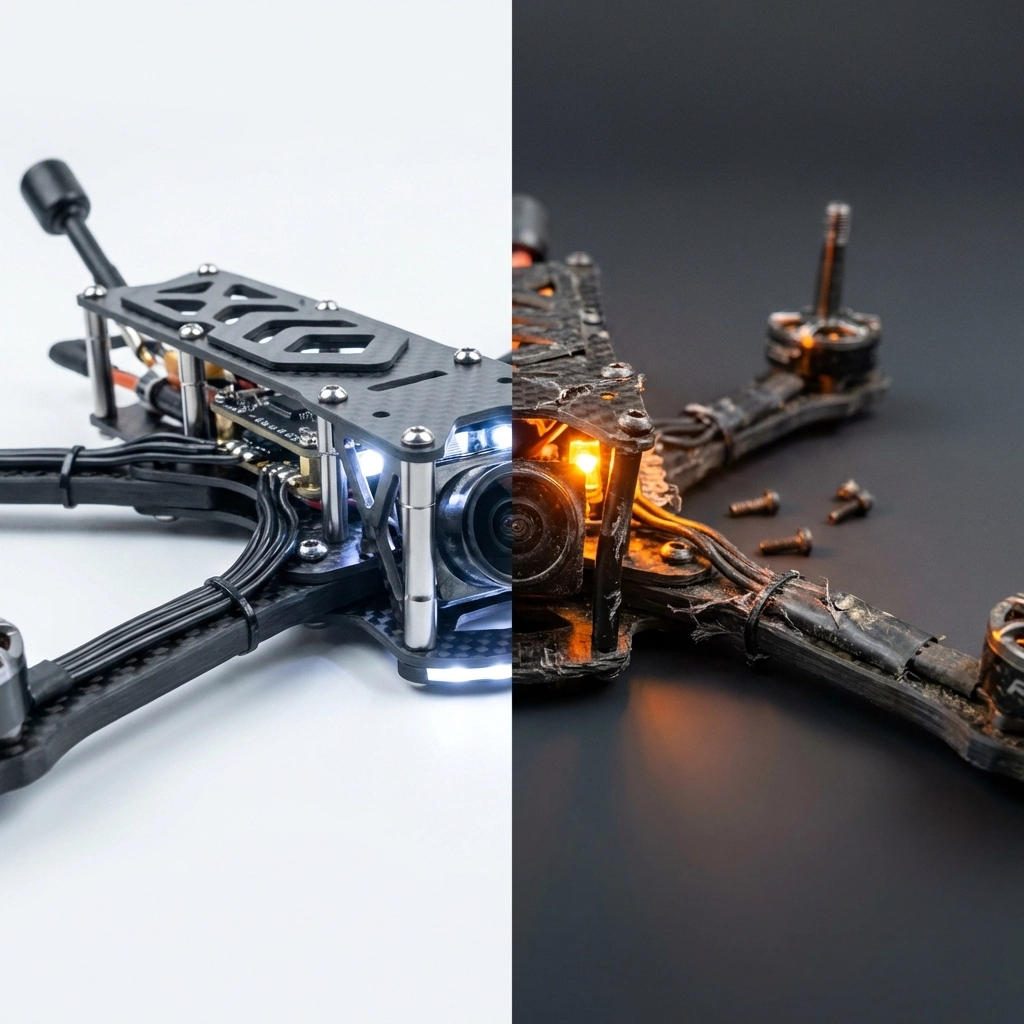
Your drone’s frame experiences incredible stress during aggressive flying, and small cracks can propagate into complete structural failures without warning. Regular frame inspection prevents catastrophic mid-air breakups that can damage expensive cameras and electronics. If damage is beyond a quick fix, our Full Rebuild / Frame Swap Package ($180-$300) gets you back in the air with a clean build.
Stress point examination focuses on areas where arms connect to the main body, motor mounting points, and anywhere different materials meet. Carbon fiber frames can develop delamination that isn’t immediately visible but compromises structural integrity.
Electronic system checks should identify short circuits, missing components, blown capacitors, frayed wires, and poor solder joints before they cause system failures. Many electronic problems start as intermittent issues that become permanent failures under flight stress.
Cost-Benefit Analysis: Maintenance vs. Replacement
Professional maintenance practices typically cost less than $20 per month in supplies and tools but can prevent repair bills that easily exceed $200-500 for major component failures. Quality drone components and proper maintenance supplies represent insurance against much larger replacement costs.
Consider that a replacement motor costs $30-80, while proper bearing maintenance costs under $5 annually. A new frame runs $50-150, while stress fracture inspection takes minutes and costs nothing. If a crash does happen, the “Ready-to-Fly Again” Crash Recovery Package ($325-$400) bundles diagnostics, repair, and test flights so you can recover faster.
Building Your Maintenance Toolkit
Effective maintenance requires the right tools and supplies. Basic cleaning supplies, quality lubricants, proper fasteners, and basic electronic testing equipment pay for themselves quickly through prevented failures.
TechInMotion360’s support packages often include maintenance supplies specifically chosen for FPV applications, ensuring compatibility and performance. If you’d rather we handle it end-to-end, the FPV Drone Basic Maintenance & Repair ($40-$75) covers cleaning, inspections, and minor fixes.
Long-Term Performance Optimization
Consistent maintenance doesn’t just prevent failures: it actively improves performance over time. Clean motors run cooler and more efficiently, properly maintained batteries deliver more consistent power, and well-maintained frames handle stress better during aggressive maneuvers.
Flight time improvements from proper battery care alone can add 2-4 minutes per flight, while motor maintenance ensures consistent power delivery throughout the battery’s discharge cycle.
Professional Support and Resources
While basic maintenance can be performed by any pilot, complex repairs and major overhauls benefit from professional expertise. Knowing when to seek professional help prevents amateur repairs that can cause more damage than the original problem.
Many maintenance tasks become easier with experience, but starting with professional guidance ensures you develop proper techniques from the beginning. TechInMotion360 provides resources and support for pilots at every maintenance skill level. For quick guidance, book a Phone/Video Basic Support “Quick Fix Call” ($50). For pre-session checks, choose the Phone/Video Standard Support “Flight Ready Check” ($75). For deeper tuning, use Phone/Video Advanced Support “Performance Tune & Troubleshoot” ($125). If you’re grounded, our “Ready-to-Fly Again” Crash Recovery Package ($325-$400), Full Rebuild / Frame Swap Package ($180-$300), and Performance Upgrade Package ($175-$250) get you flying again with confidence. Want ongoing help? The Phone/Video Annual Remote Support Plan “Fly with Confidence” ($350) keeps you covered all year.
The investment in proper maintenance pays dividends in extended component life, improved performance, and reduced emergency repair costs. Your future self: and your bank account: will thank you for establishing these habits early. Every flight hour gained through prevention is infinitely more valuable than time lost to repairs.
Leave a comment