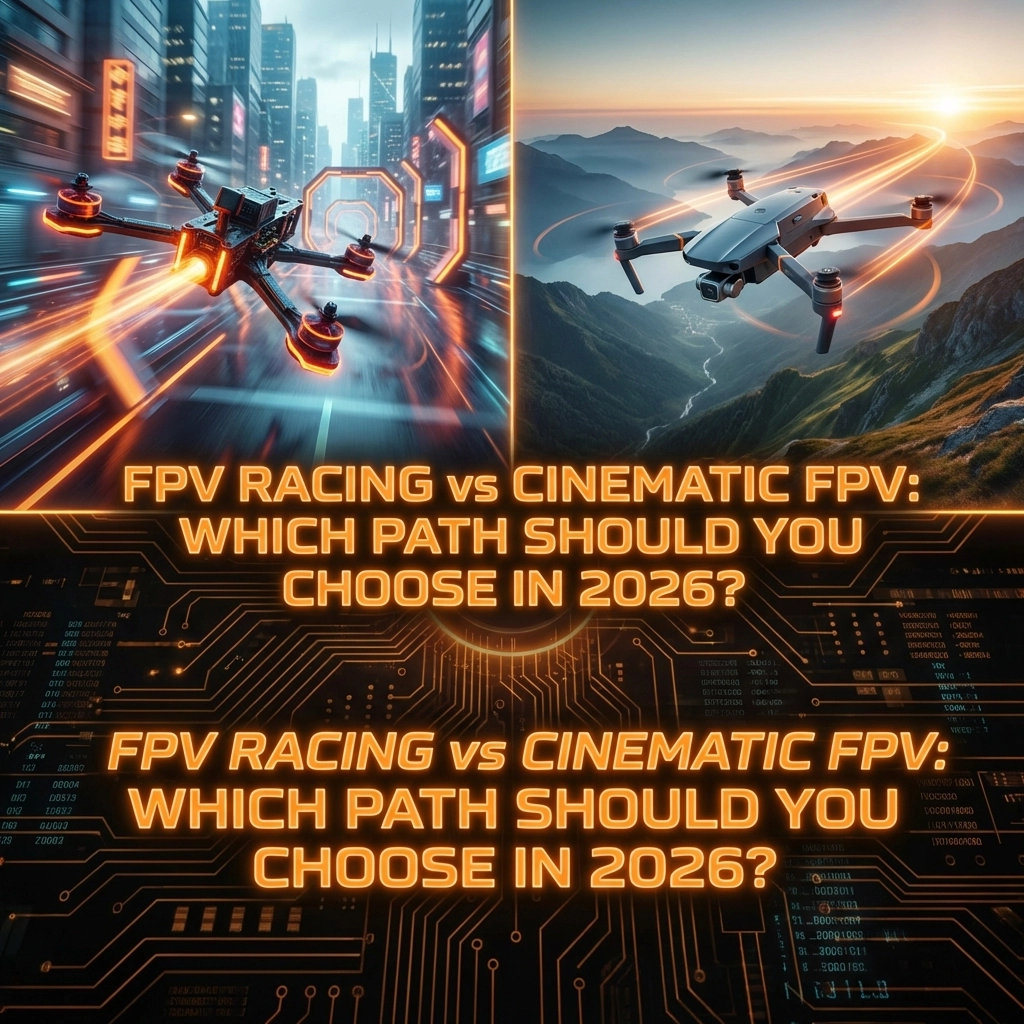
You’ve mastered the basics, your goggles are dialed in, and your quad is finally flying smooth. Now comes the moment every FPV pilot faces: which path do you take? Racing through gates at breakneck speeds, or crafting cinematic masterpieces that capture the impossible? In 2026, both paths offer incredible opportunities, but they lead to completely different destinations.
This isn’t about which quad to buy, it’s about which pilot you want to become.
The Racing Path: Speed, Precision, and Pure Adrenaline
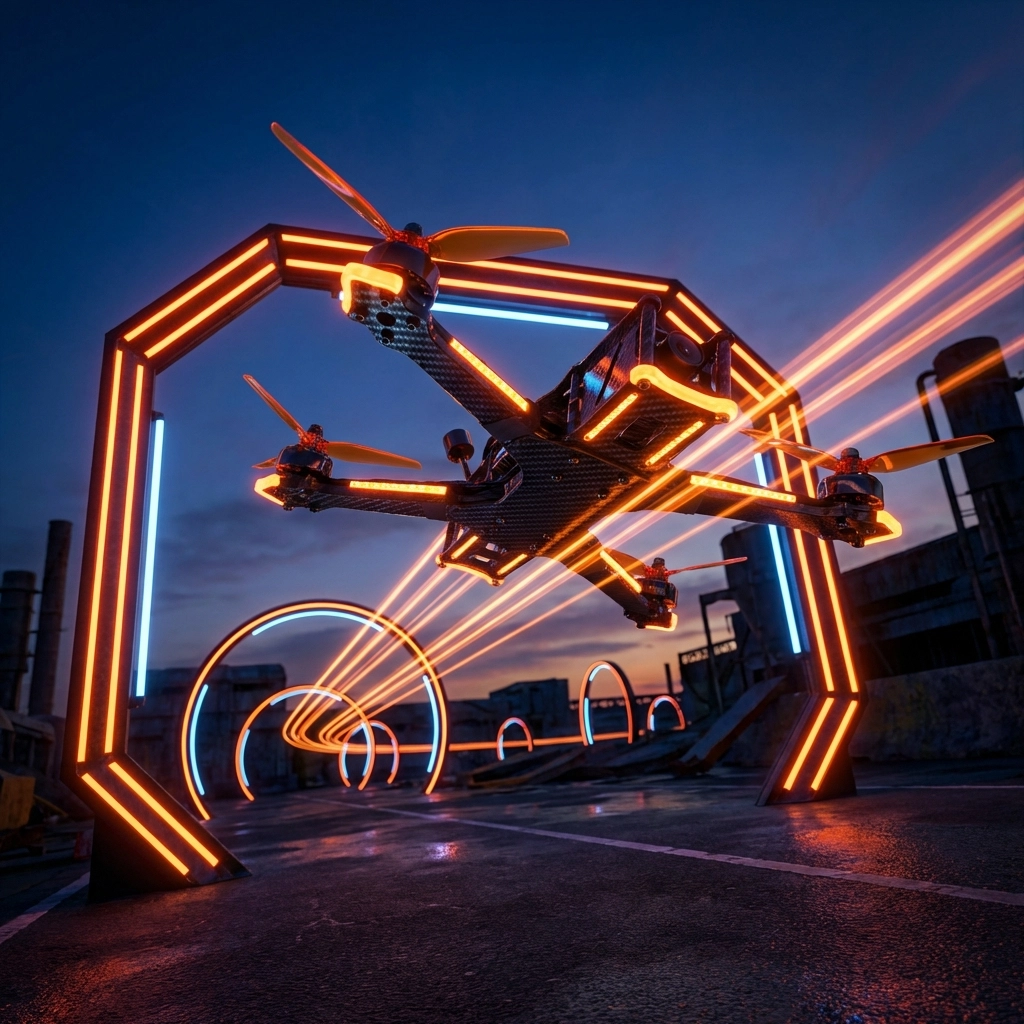
FPV racing is digital combat at 100+ mph. Picture yourself threading the needle between gates while three other pilots try to overtake you, all while your heart pounds and muscle memory takes over. Racing pilots develop reflexes that border on superhuman, reacting to course changes in milliseconds.
What Racing Really Demands
Racing isn’t just about going fast, it’s about being consistently fast under pressure. You’ll spend countless hours learning racing lines, perfecting your throttle control, and developing the mental fortitude to execute flawless runs when it matters. The skill ceiling is impossibly high, which means there’s always another level to reach.
The racing community operates on respect earned through performance. Rankings matter. Lap times matter. When you nail a perfect line that shaves two seconds off your personal best, that rush is pure addiction. But be ready for frustration too, racing will humble you repeatedly before it rewards you.
The Racing Lifestyle
Racing pilots often become part of tight-knit local communities. Race days become social events where pilots share tuning tips, celebrate victories, and commiserate over spectacular crashes. The competitive spirit creates bonds that extend far beyond flying.
Expect to invest significant time in maintenance and tuning. Racing quads take punishment, and you’ll become intimate with every screw, wire, and component. This technical knowledge often leads pilots into building custom racing setups that perfectly match their flying style.
The Cinematic Path: Storytelling Through Flight
Cinematic FPV transforms you into a flying cinematographer. You’re not just piloting, you’re painting with movement, creating shots that would be impossible with traditional cameras. According to recent industry data, over 60% of commercial drone video projects now incorporate FPV techniques, making this a path with serious professional potential.
What Cinematic Flying Entails
Cinematic pilots master three distinct flight modes: aggressive manual flying for dynamic shots, stabilized flight for smooth transitions, and cinematic mode for butter-smooth footage. You’ll learn to think like a director, planning shots that tell stories and evoke emotions.
The satisfaction comes from nailing the perfect reveal shot or capturing a moment that makes viewers feel like they’re flying. Unlike racing’s immediate feedback loop, cinematic work often requires patience, multiple takes, and post-production skills.
Creative and Commercial Opportunities
The cinematic path opens doors racing simply can’t. Real estate agents need cinematic drone services for property tours. Wedding photographers want dynamic footage that traditional drones can’t achieve. Content creators crave the unique perspectives only FPV can deliver.
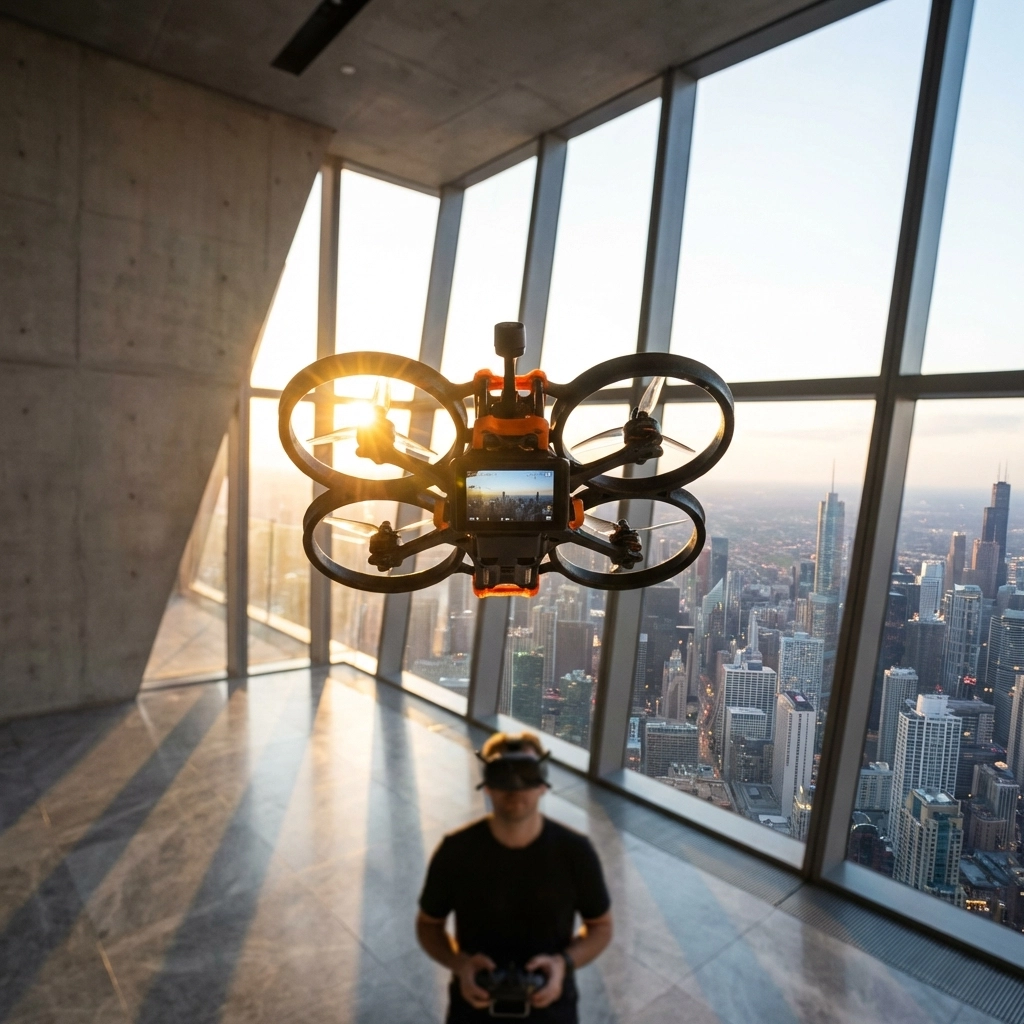
Cinewhoop-style builds have become particularly valuable, accounting for 63% of commercial FPV projects. These compact, ducted-prop drones excel at tight interior shots and building tours that showcase spaces in revolutionary ways.
Skill Development: Two Different Journeys
Racing Skills Focus On:
- Split-second decision making
- Precision throttle and stick control
- Race line optimization
- High-stress performance
- Technical tuning knowledge
- Crash recovery and maintenance
Racing pilots develop incredible muscle memory and spatial awareness. The constant pressure to improve lap times creates pilots who can execute complex maneuvers instinctively.
Cinematic Skills Focus On:
- Smooth, controlled movements
- Shot composition and framing
- Storytelling through camera movement
- Working with clients and directors
- Post-production workflow
- Risk assessment for valuable equipment
Cinematic pilots become well-rounded creative professionals, developing business skills alongside flying expertise. Many successful cinematic pilots report that client communication and project management become as important as stick skills.
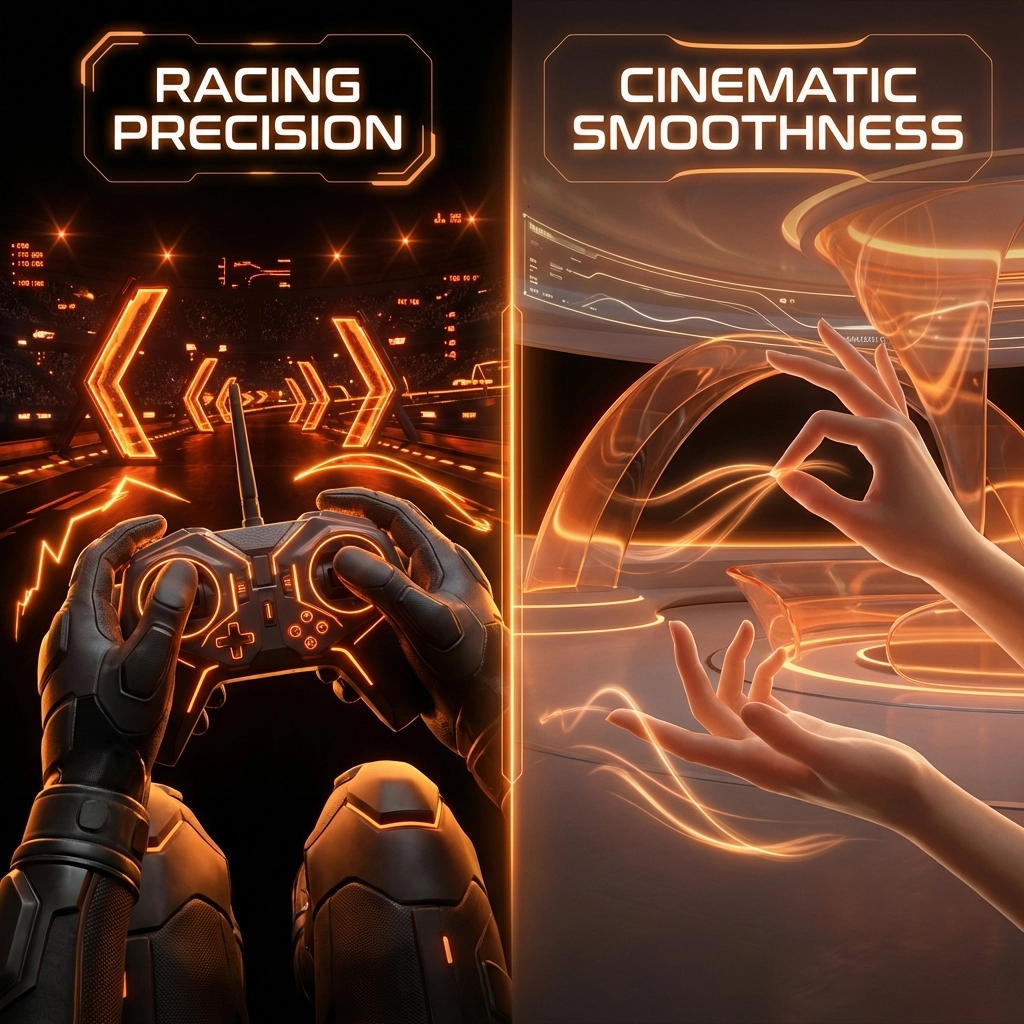
Community Culture: Competition vs Collaboration
The racing community thrives on competition. Pilots constantly push each other to fly faster, try more aggressive lines, and achieve better rankings. This competitive environment accelerates skill development but can feel intense for pilots who prefer collaborative learning.
Racing events create electric atmospheres where pilots share technical knowledge while fiercely competing. The community values performance above all else: your reputation is built on lap times and race results.
The cinematic community operates more collaboratively. Pilots share shots, discuss techniques, and often work together on projects. Success is measured differently: by the beauty of footage, client satisfaction, or creative breakthroughs rather than raw performance metrics.
Cinematic pilots often develop networks that include filmmakers, real estate professionals, and content creators. These connections frequently lead to paid opportunities and creative collaborations.
Investment Levels and Returns
Racing Investment:
- Lower initial hardware costs (analog systems, lightweight components)
- High ongoing maintenance costs due to frequent crashes
- Equipment focused on performance over longevity
- Potential prize money and sponsorships for top performers
- Limited monetization options outside competitive success
Racing can be surprisingly affordable to start but expensive to maintain at competitive levels. However, the technical skills developed often translate into other drone-related opportunities.
Cinematic Investment:
- Higher initial costs for quality cameras and stabilization
- More expensive equipment due to commercial-grade requirements
- Lower crash rates mean longer equipment lifespan
- Multiple revenue streams: real estate, events, content creation
- Scalable business potential with proper support packages
Cinematic pilots often see faster returns on investment through paid work, but the barrier to entry can be higher due to equipment costs and the need for additional skills like video editing.
Making Your Decision: Follow Your Energy
The right path often reveals itself through your natural interests and energy patterns:
Choose Racing If:
- You crave competition and measurable performance goals
- Quick feedback loops motivate you
- You enjoy technical tuning and optimization
- High-stress situations energize rather than drain you
- You want to be part of a competitive community
- Pure flying skill development is your primary goal
Choose Cinematic If:
- You’re drawn to creative expression and storytelling
- You enjoy working with clients and solving visual problems
- Business development and marketing appeal to you
- You prefer collaborative over competitive environments
- Multiple income streams interest you more than prize money
- You want to combine flying with other creative skills
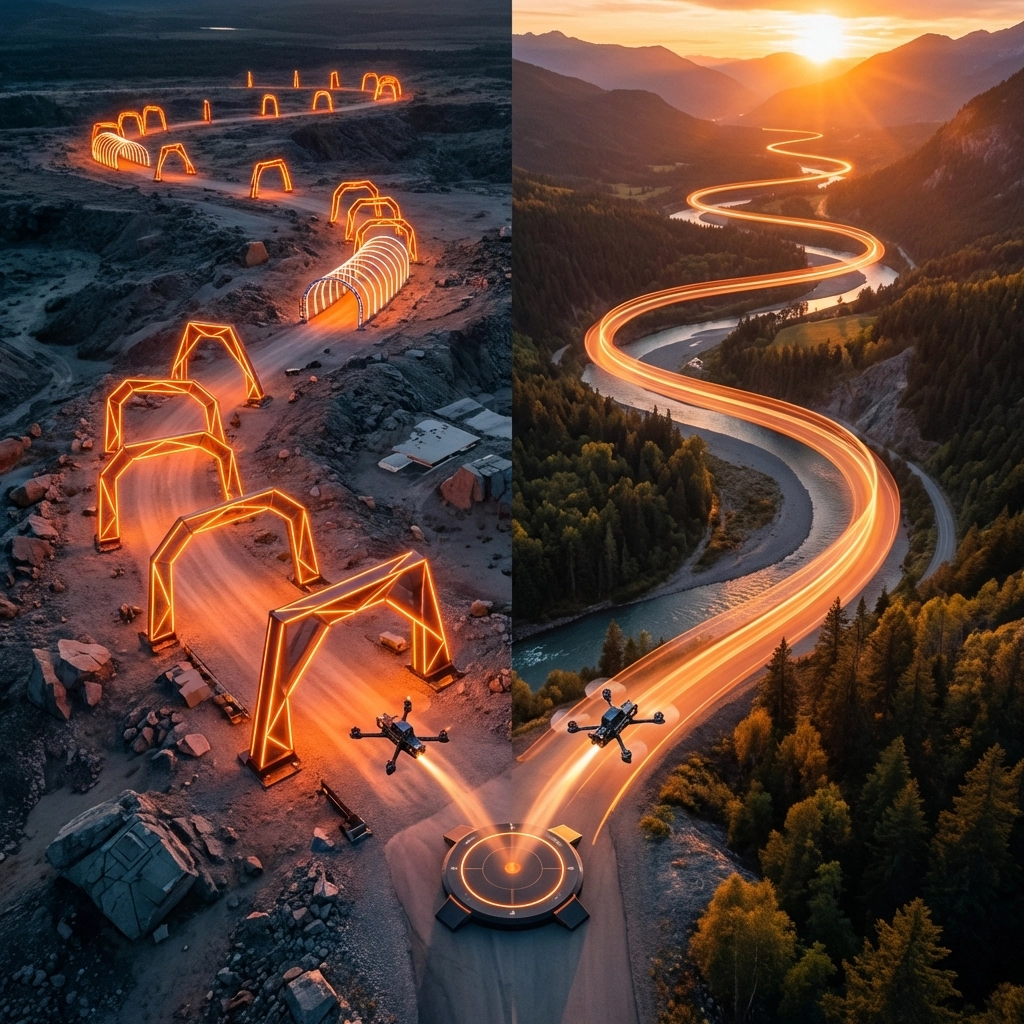
Getting Started on Your Chosen Path
Racing Beginners: Start by finding local racing groups and attending events as a spectator. Most racing communities welcome newcomers and offer advice on entry-level racing builds. Focus on consistent flying before worrying about speed: clean, repeatable flights will improve faster than trying to go fast immediately.
Cinematic Beginners: Begin by studying cinematic footage and understanding what makes shots compelling. Practice smooth flying in open areas before attempting complex shots. Consider starting with drone components that allow you to build experience while keeping costs manageable.
Both paths benefit from proper preparation and realistic expectations. Racing pilots should prepare for frequent crashes and rebuilds. Cinematic pilots should invest in learning post-production skills and understanding client needs.
Your FPV Future Starts Now
The beautiful truth about FPV is that there’s no wrong choice: only different adventures. Racing pilots develop incredible precision and join communities united by shared passion for performance. Cinematic pilots become visual storytellers with the freedom to explore creative and commercial opportunities.
Some pilots eventually explore both paths, using racing skills to enhance their cinematic capabilities or applying cinematic thinking to make their racing footage more compelling. The skills from either path create a foundation for any drone-related career.
The most important decision isn’t which path to choose: it’s committing fully to the journey ahead. Whether you’re chasing lap times or perfect shots, 2026 offers incredible opportunities for dedicated FPV pilots willing to push their limits.
Your quad is ready. Your skills are developing. The only question remaining is: which pilot do you want to become?
Leave a comment