
Real Estate Listings with Drone Video Get 37% More Showings: Here's How to Get Started
The real estate game has changed forever. While other agents are still relying on ground-level photos and hoping for the best, smart professionals are leveraging aerial real estate marketing to dominate their local markets. The numbers don't lie: properties marketed with drone video are crushing traditional listings in every metric that matters.
Here's what's really happening: buyers aren't just browsing listings anymore, they're experiencing properties before they even step foot inside. And when you give them that cinematic, bird's-eye perspective of a home nestled in its neighborhood, something magical happens. They can already picture themselves living there.
The ROI Revolution: Why Drone Video Changes Everything
Let's cut straight to the facts that'll make your broker pay attention. Properties with aerial video services aren't just getting noticed: they're converting at rates that'll make you rethink everything about your marketing strategy.
The hard numbers:
- Listings with aerial footage are 65% more likely to result in actual showings
- Properties sell approximately 68% faster when marketed with drone video
- Inquiries jump by 403% when drone footage is combined with other visual media
- Price increases of up to 10% are common for aerially-marketed properties
- 57% of today's buyers expect to see 8-10 aerial shots minimum
But here's what those statistics really mean for your bottom line: if you're closing 20 deals a year without drone video, adding cinematic drone videography to your arsenal could realistically push you to 30+ closings. That's not just growth: that's transformation.
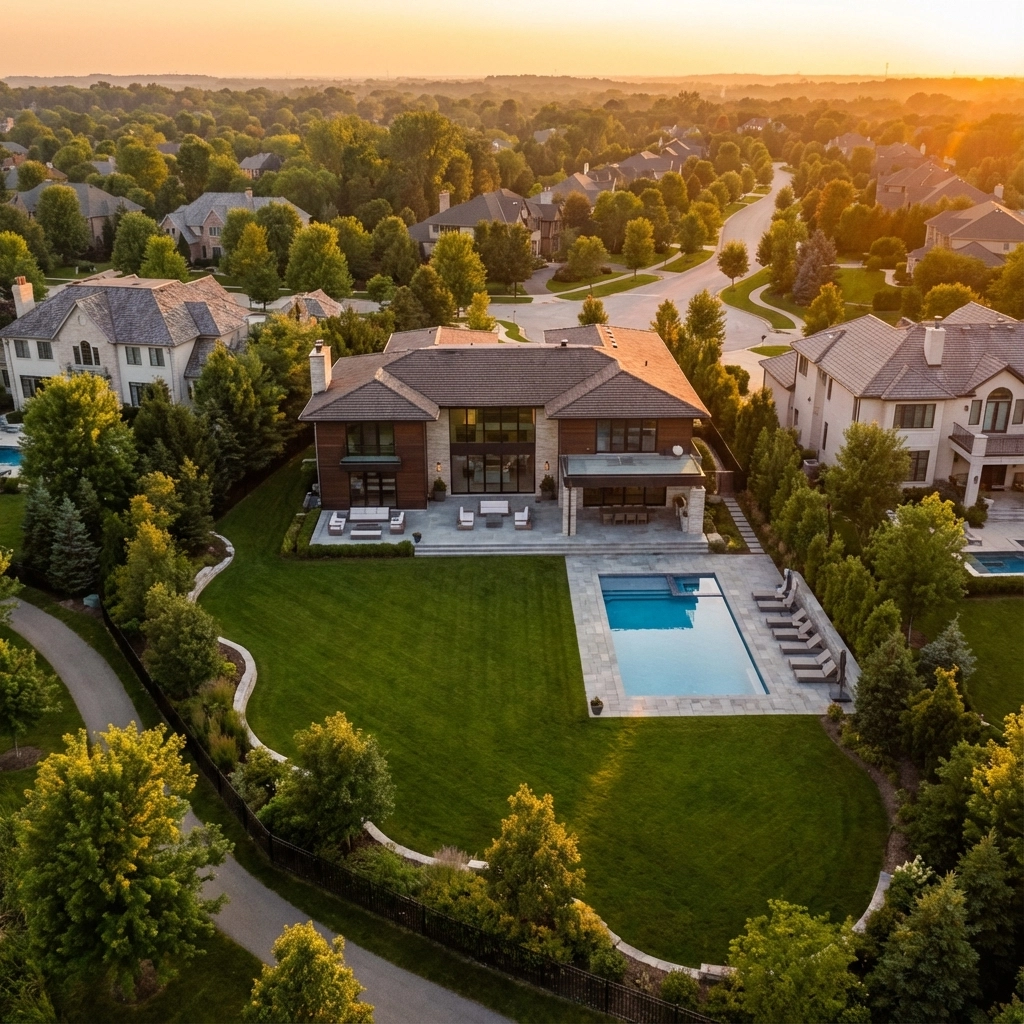
The psychology behind it is simple. When potential buyers see a property from above, they're not just seeing a house: they're seeing a lifestyle. They see how the home sits on its lot, how it relates to the neighborhood, whether there's privacy, how close it is to amenities. All of that context creates an emotional connection that static photos simply can't match.
Why Traditional Real Estate Photography Falls Short
Ground-level photography has served us well for decades, but it's hitting its limitations in today's market. Buyers are more sophisticated, more visual, and frankly, more demanding than ever before. They're scrolling through dozens of listings on their phones, making split-second decisions about which properties deserve their time.
Traditional photos show rooms. Drone footage shows possibilities.
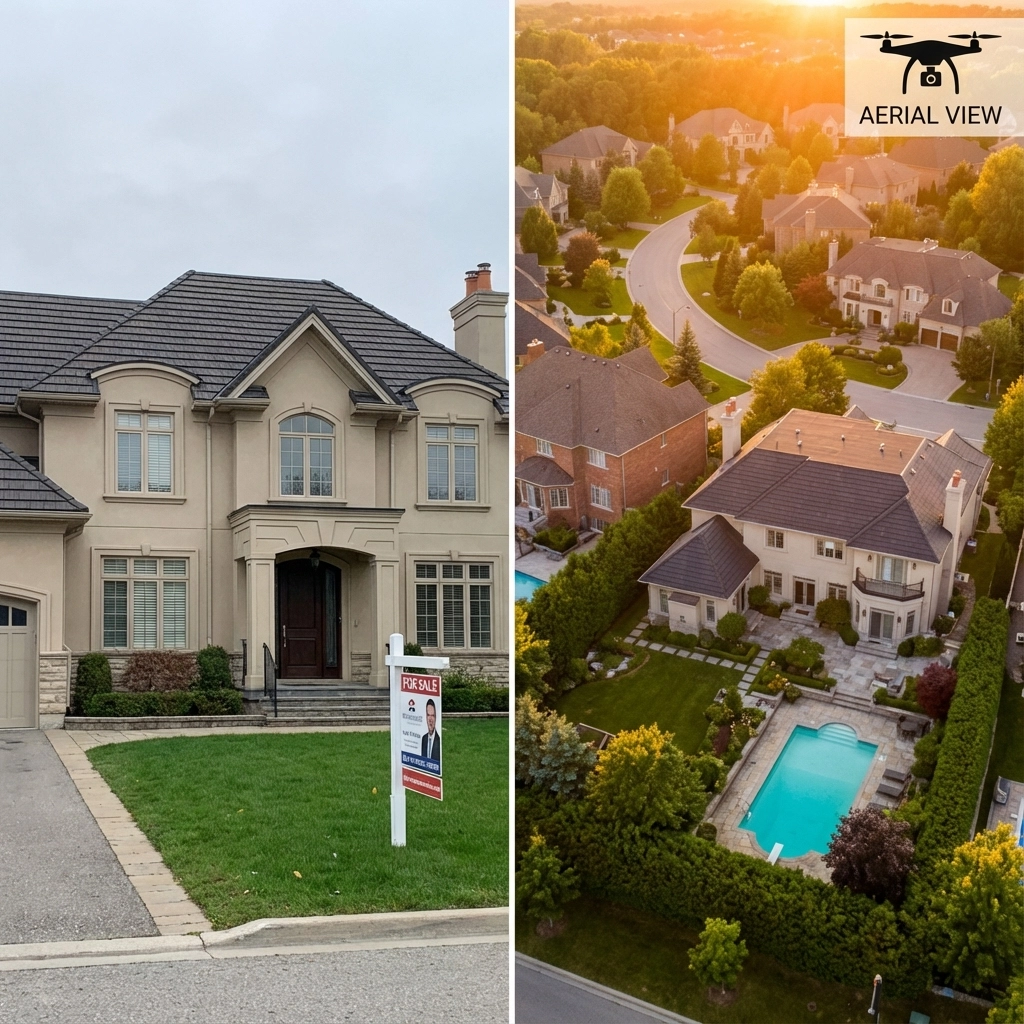
When you're marketing a waterfront property, ground-level shots might capture the deck and maybe a sliver of water in the background. Aerial footage reveals the entire shoreline, the dock, the relationship between the home and the water: it tells the complete story that buyers need to make emotional decisions.
The same principle applies to every property type. A suburban home surrounded by mature trees looks nice in traditional photos, but aerial footage shows the privacy, the lot size, the neighborhood character that makes buyers reach for their phones to schedule showings.
Getting Started: Your Step-by-Step Blueprint
Step 1: Understanding the Investment
Professional aerial real estate marketing typically runs $200-500 per property, depending on your market and the scope of coverage. Before you balk at the cost, remember those ROI numbers we discussed. If drone footage helps you sell a $400K property just 10 days faster, you've more than paid for the service in reduced carrying costs alone.
Step 2: Choose Your Service Provider Wisely
Not all drone operators understand real estate marketing. You need someone who gets that you're not just capturing pretty footage: you're creating marketing assets that need to convert browsers into buyers.
Look for providers who offer:
- Fully licensed and insured operations
- Real estate-specific shot lists and sequences
- Quick turnaround times (24-48 hours max)
- Multiple deliverable formats optimized for different platforms
- Understanding of MLS requirements and restrictions
Step 3: Plan Your Shots Strategically
The most effective cinematic drone videography for real estate isn't random: it's carefully choreographed to tell your property's unique story. Work with your drone pilot to identify the key selling points that aerial footage can showcase:
- Property boundaries and lot size: Perfect for showcasing acreage or unique lot configurations
- Neighborhood context: Show proximity to schools, parks, shopping, or transportation
- Privacy and seclusion: Highlight mature landscaping or private positioning
- Outdoor amenities: Pools, decks, gardens, and outdoor living spaces shine from above
- Architectural features: Unique rooflines, additions, or property layouts become clear from aerial perspectives
Step 4: Optimize for Maximum Impact
Having great drone footage is just the beginning: how you deploy it determines your results. Here's where most agents drop the ball:
MLS Strategy: Lead with your strongest aerial shot as the primary listing photo. Buyers make viewing decisions in seconds, and nothing stops the scroll like a compelling aerial perspective.
Social Media Deployment: Short, engaging drone video clips perform exceptionally well on Instagram, Facebook, and YouTube. Create 15-30 second teasers that highlight your property's best aerial features.
Virtual Tours Integration: Combine aerial footage with interior walkthroughs for a complete property narrative that captures attention and maintains engagement throughout the buyer's decision process.
Maximizing Your Drone Video ROI
The real secret to success with aerial video services isn't just getting the footage: it's leveraging it across every touchpoint in your marketing funnel.
Pre-Listing Strategy: Use aerial footage during listing presentations to show sellers the elevated marketing approach they'll receive. Nothing demonstrates your commitment to premium service like showing past examples of your aerial marketing.
Buyer Communication: Send aerial footage to qualified buyers before showings. When they arrive already excited about the property's positioning and features, showings become more focused and productive.
Long-Term Asset Building: Quality aerial footage becomes part of your marketing portfolio. Use clips and stills in your overall brand marketing to demonstrate the level of service clients can expect.

Multi-Platform Distribution: Don't limit aerial content to just MLS listings. Deploy across:
- Your website property pages
- Social media platforms
- Email marketing campaigns
- Print marketing materials
- Buyer presentation packages
The Technical Edge: What Makes Footage Convert
Not all drone video is created equal. The difference between footage that converts and footage that just looks nice comes down to technical execution and storytelling approach.
Movement and Flow: Static aerial shots are better than nothing, but cinematic drone videography with smooth, purposeful movement creates emotional engagement. Slow reveals, gentle orbits, and strategic altitude changes guide viewers through a visual story.
Timing and Lighting: Golden hour footage (the hour after sunrise or before sunset) provides the warm, inviting lighting that makes properties feel like home. Harsh midday lighting might show details clearly, but it doesn't create the emotional response that drives showings.
Editing and Pace: Quick cuts and flashy transitions might look impressive, but real estate drone video should breathe. Give viewers time to absorb the property's features and imagine themselves in the space.
Building Your Competitive Advantage
Here's the reality: aerial real estate marketing is still emerging in many markets. Early adopters are capturing disproportionate market share while their competitors figure out what's happening.
But this window won't stay open forever. In major metropolitan markets, aerial footage is already becoming standard. In secondary and tertiary markets, you still have time to establish yourself as the agent who provides premium, cutting-edge marketing services.
The agents who'll dominate the next decade of real estate aren't just adapting to change: they're driving it. They understand that buyers' expectations have evolved, and they're meeting those expectations with innovative aerial video services that create clear competitive differentiation.
Your Next Steps
The path forward is straightforward: start incorporating professional cinematic drone videography into your marketing arsenal now, while you can still gain competitive advantage from the strategy.
Begin with your most important listings: the properties where enhanced marketing could make the biggest impact on your commissions and client satisfaction. Track your results carefully: days on market, showing requests, final sale prices, and client feedback.
Most importantly, don't wait for perfect market conditions or complete certainty. The agents winning today's real estate battles are the ones who recognized that aerial marketing isn't a luxury anymore: it's a necessity for serious professionals who want to provide the level of service that today's buyers demand.
Ready to transform your listings from overlooked to irresistible? The sky isn't the limit anymore; it's your competitive advantage.