
Let’s be real for a second, your FPV drone is only as good as the battery strapped to it. You could have the most dialed-in tune, the crispest camera setup, and motors that sing like angels, but if your battery is trash? You’re coming down early, watching voltage sag ruin your footage, or worse, dealing with a puffed pack that’s become a safety hazard.
I’ve seen too many pilots cheap out on batteries and pay for it later. Sometimes literally, when they have to replace damaged electronics. Sometimes figuratively, when they miss the shot because their pack couldn’t hold up under load.
So today, we’re breaking down what separates quality LiPo batteries from the generic packs flooding the market, and why the difference matters more than you might think.
Why Your Battery Choice Actually Matters
Here’s the thing about FPV batteries that nobody tells you when you’re starting out: they’re not all created equal. Two batteries with identical specs on paper can perform wildly differently in the air.
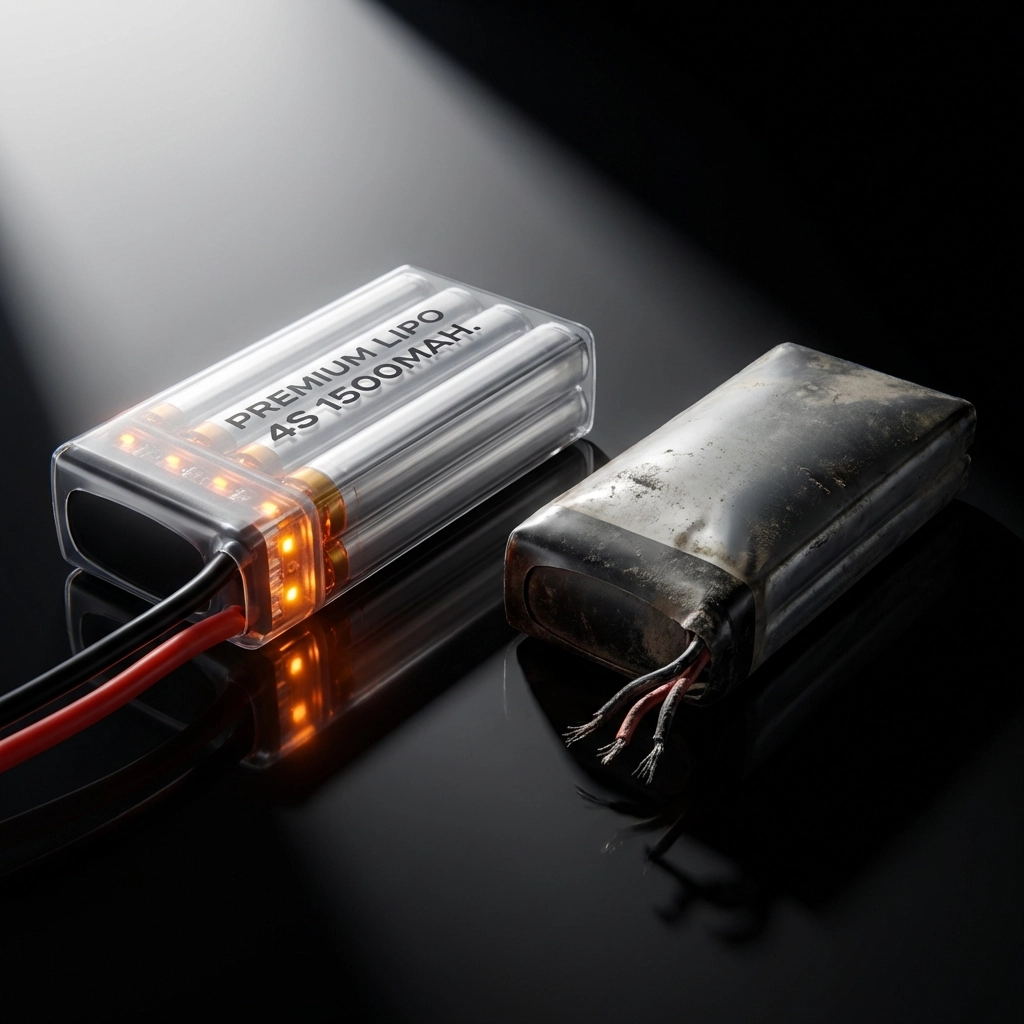
A quality battery delivers consistent power throughout your flight. It handles the amp demands when you punch out of a dive. It charges safely and maintains capacity over hundreds of cycles. A generic pack? It might do all those things… for a while. Then the voltage sag creeps in, the capacity drops, and suddenly that “1500mAh” battery is giving you 1100mAh on a good day.
The real cost of cheap batteries isn’t just the replacement cycle, it’s the performance you’re leaving on the table every single flight.
Understanding LiPo Battery Basics
Before we dive into comparisons, let’s make sure we’re speaking the same language.
Capacity (mAh): This is how much energy your battery can store. Racing and freestyle pilots typically run 1300-1500mAh packs for the power-to-weight balance. Cinematic flying? You’ll want 1800mAh or higher to maximize flight duration without sacrificing too much agility.
Discharge Rate (C Rating): This tells you how quickly the battery can deliver power. A 100C battery can theoretically discharge 100 times its capacity per hour. For most FPV applications, you want at least 75C for freestyle and 100C+ for racing.
Cell Count (S): Most modern FPV drones run 4S or 6S configurations. Higher voltage means more power potential, but also more weight and complexity.
Internal Resistance (IR): Lower is better. This measures how efficiently the battery can deliver power. High IR means wasted energy as heat and increased voltage sag.
TechInMotion360’s Top Picks: What We Recommend
Through years of testing and real-world flying, we’ve identified the battery characteristics that actually matter for different flying styles. When clients come to us for power system upgrades, battery selection is always part of the conversation.
For Long-Range and Cinematic Work
If you’re chasing extended flight times, think long-range cruising or cinematic real estate shots, the battery game changes completely. Li-Ion cells like the Molicel P30B have become the gold standard here. They offer superior energy density, meaning more flight time per gram of weight.
For 10-inch long-range builds, we typically recommend 6S configurations in the 8000-10000mAh range with 25-30C discharge rates. These aren’t going to win any races, but they’ll keep you in the air for 20+ minutes of smooth, controlled flight.

For Freestyle and Racing
This is where high-quality LiPo packs shine. You need batteries that can dump serious amps without flinching, and recover quickly when you let off the throttle. Look for:
- True 100C+ discharge capability (not just marketing numbers)
- Low internal resistance across all cells
- Balanced cell voltages out of the box
- Quality XT60 connectors with solid solder joints
The Molicel P28A and Sony VTC6 cells are excellent choices for builds where you need both punch and reasonable flight times.
Generic LiPo Packs: The Hidden Costs
Now let’s talk about those suspiciously cheap batteries you see online. You know the ones: $15 for a 1500mAh 100C pack that seems too good to be true.
Spoiler: It usually is.
The C Rating Problem
Generic manufacturers are notorious for inflating C ratings. That “100C” battery might actually deliver 40-50C before voltage sag makes it unusable. This isn’t just annoying: it’s potentially dangerous if your quad suddenly loses power mid-maneuver.
Inconsistent Cell Quality
Quality battery manufacturers test and match cells within each pack. Generic packs? They grab whatever’s available. This leads to unbalanced cells, where one cell works harder than the others and degrades faster. Eventually, you’re charging a time bomb.
The False Economy
Let’s do some quick math. A quality battery costs $35 and lasts 300 cycles. A generic pack costs $15 and lasts 75 cycles before it’s puffed or performing poorly.
Quality battery: $35 ÷ 300 = $0.12 per flight
Generic battery: $15 ÷ 75 = $0.20 per flight
You’re actually paying MORE per flight with cheap batteries: and getting worse performance the entire time.
Flight Time: Real-World Expectations
Let’s set some realistic expectations here, because I see a lot of pilots frustrated by flight times that don’t match their dreams.
Racing/Freestyle (5-inch, 4S-6S): 3-5 minutes of aggressive flying. This is normal. Accept it.
Cinematic Freestyle: 5-7 minutes with larger capacity packs and smoother flying style.
Long-Range Cruising: 15-25+ minutes with optimized builds and Li-Ion cells.
Cinewhoops: 4-8 minutes depending on prop size and battery capacity.
The key to maximizing flight time isn’t just buying bigger batteries: it’s optimizing your entire power system. Motor efficiency, prop selection, tune quality, and flying style all factor in. If you’re looking to squeeze more time out of your setup, our performance upgrade packages address all these elements together.
Charging Speed and Safety
Quality batteries aren’t just better in the air: they’re safer on the ground too.
Premium LiPo packs can typically handle 1C-2C charging rates safely. That means a 1500mAh battery can charge at 1.5-3 amps without excessive heat buildup or degradation. Some high-end packs even support 3C+ charging for quick turnarounds.
Generic packs? Pushing them past 1C is asking for trouble. The inconsistent cell quality means some cells heat up faster than others, accelerating wear and increasing puff risk.
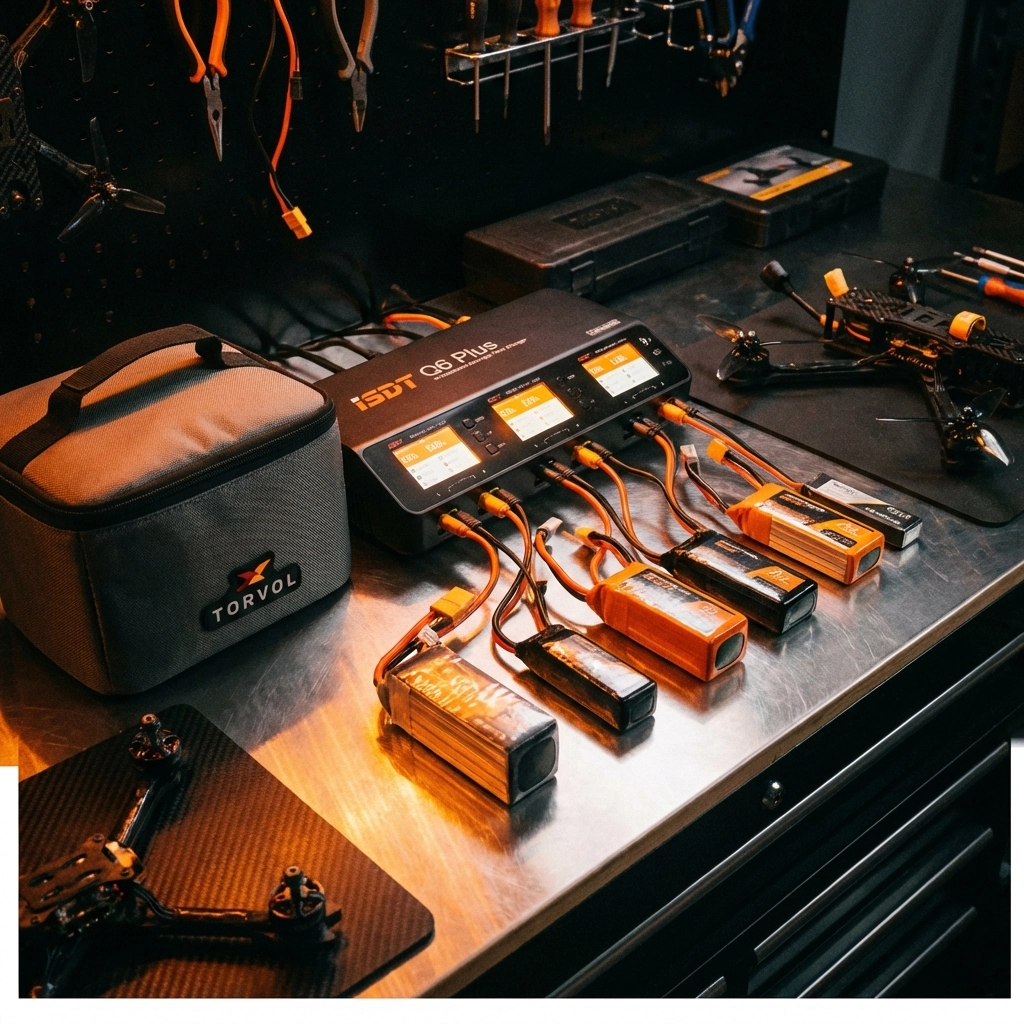
Pro tip: Invest in a quality charger with cell-level monitoring. It’ll tell you immediately if something’s wrong with your pack before it becomes a fire hazard.
Making the Right Choice for Your Flying Style
Here’s my honest recommendation based on thousands of hours helping pilots optimize their setups:
If you’re racing or doing aggressive freestyle: Buy quality mid-capacity packs (1300-1550mAh) from reputable manufacturers. The performance difference is immediately noticeable.
If you’re shooting cinematic content: Invest in higher-capacity packs (1800mAh+) with proven discharge curves. Consistency matters when you’re getting paid for footage.
If you’re building for long-range: Consider Li-Ion configurations with quality cells. The upfront cost pays dividends in flight time.
If you’re just starting out: Buy quality packs from the beginning. Building bad habits around garbage batteries will cost you more in the long run.
The Bottom Line
Your battery is the heart of your quad. It determines how long you fly, how hard you can push, and ultimately, how safe your hobby stays. Cutting corners here doesn’t save money: it costs performance, reliability, and potentially your equipment.
Need help optimizing your power system or troubleshooting battery-related issues? Check out our advanced support packages or basic maintenance services. We’re here to help you fly longer, fly better, and fly safer.
Now get out there and send it( with batteries you can actually trust.)
Leave a comment