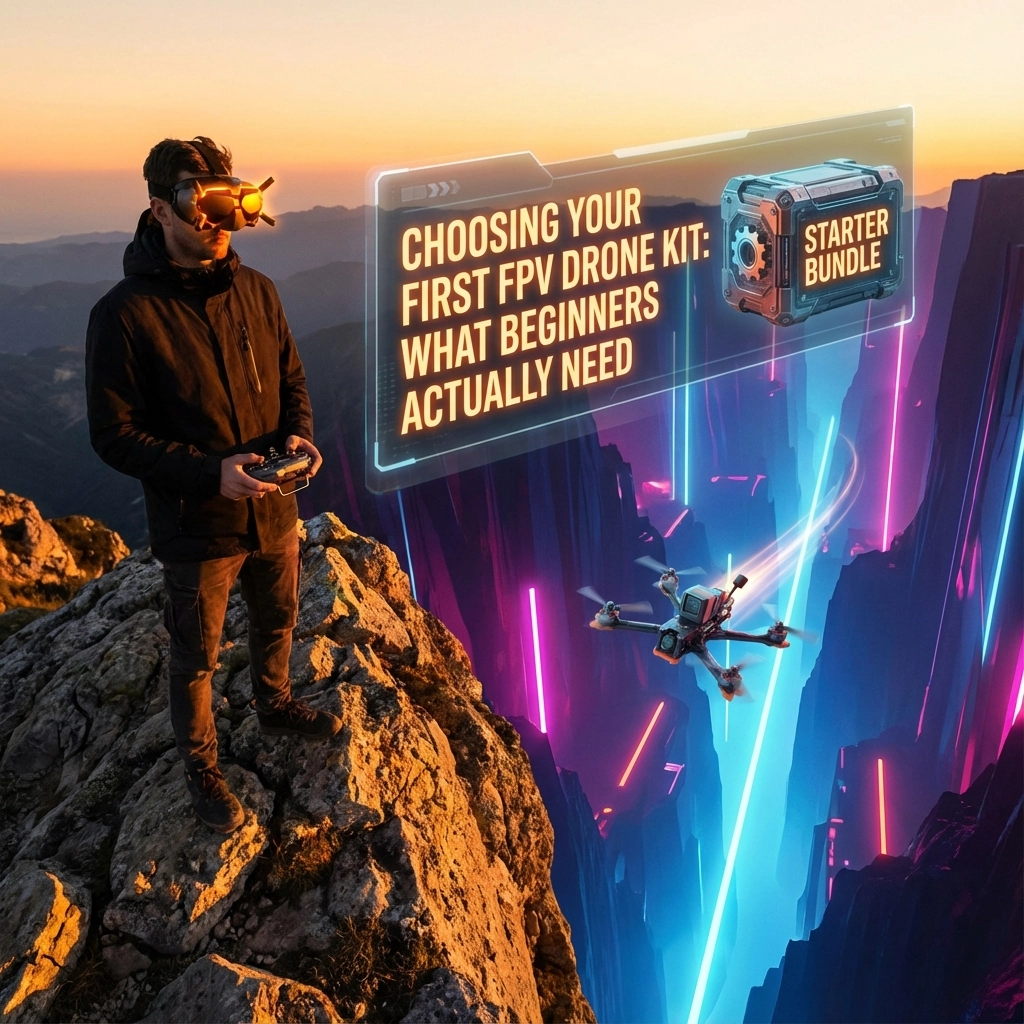
The world of FPV drone racing and cinematic flight is calling your name. You've watched countless YouTube videos of pilots threading the needle between trees at 60 mph, capturing breathtaking aerial footage that makes Hollywood jealous. Now you're ready to take the leap from spectator to pilot.
But here's where most beginners hit their first wall: What do you actually need to buy?
Walking into the FPV drone world can feel like entering a foreign country where everyone speaks in acronyms like ESC, VTX, and PDB. Don't worry , we're about to break down exactly what you need to get airborne without breaking the bank or your spirit.
The Great Beginner's Dilemma: Ready-to-Fly vs. Build-Your-Own
Your first major decision isn't about which drone to buy , it's about how you want to get into the air.
Ready-to-Fly (RTF) Kits: The Fast Track to Flight
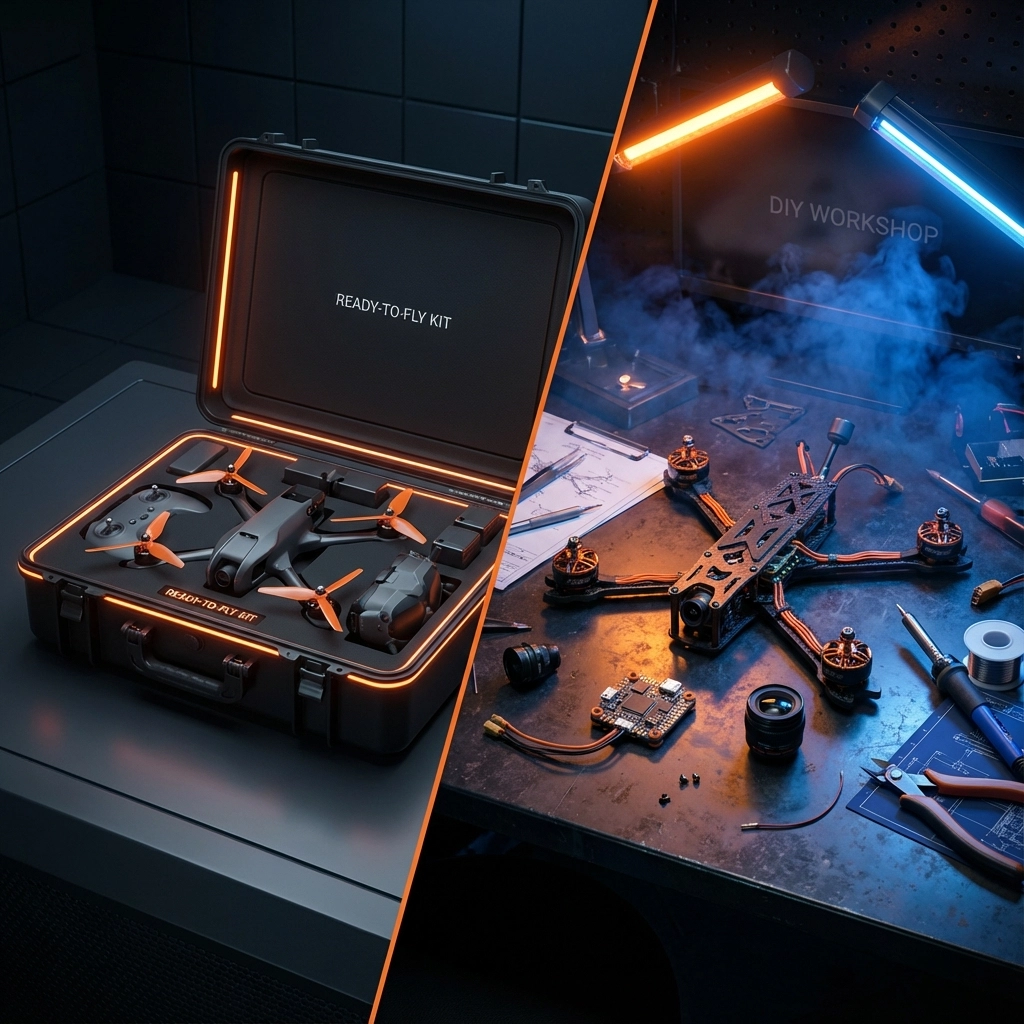
Ready-to-fly kits are like getting a complete meal at a restaurant instead of grocery shopping and cooking. Everything you need comes in one box: drone, controller, FPV goggles, battery, and charger.
The RTF advantage is simple: Unbox, charge, and fly within an hour.
Popular RTF options include:
- BetaFPV Cetus X Kit ($250-300): Perfect for indoor and outdoor learning
- DJI Avata 2 ($769): Premium option with crash-resistant design and 4K video
- EMAX Tinyhawk III (~$269): Great balance of features and affordability
Build-Your-Own (BNF/PNP): The Learning Path
Building your own FPV drone is like learning to cook. Yes, it takes longer and you might burn a few meals, but you'll understand every ingredient and technique. This knowledge becomes invaluable when you need repairs or want to upgrade components.
Understanding the Essential Components
Every FPV setup requires three core systems working in harmony:
1. The Flight System
- Frame: Your drone's skeleton (typically 3-7 inches diagonal motor-to-motor)
- Flight Controller: The brain that keeps everything stable
- Electronic Speed Controllers (ESCs): Control motor speed and direction
- Motors: Create lift and maneuverability
- Propellers: Convert motor rotation into thrust
2. The Video System
- FPV Camera: Captures live video feed
- Video Transmitter (VTX): Broadcasts camera feed wirelessly
- FPV Goggles with Receiver: Your window into the drone's perspective
3. The Control System
- Radio Transmitter: Your physical controller
- Radio Receiver: Mounted on drone, receives your control inputs
Frame Size: Your Gateway Decision
Frame size isn't just about physical dimensions : it determines your entire flying experience.
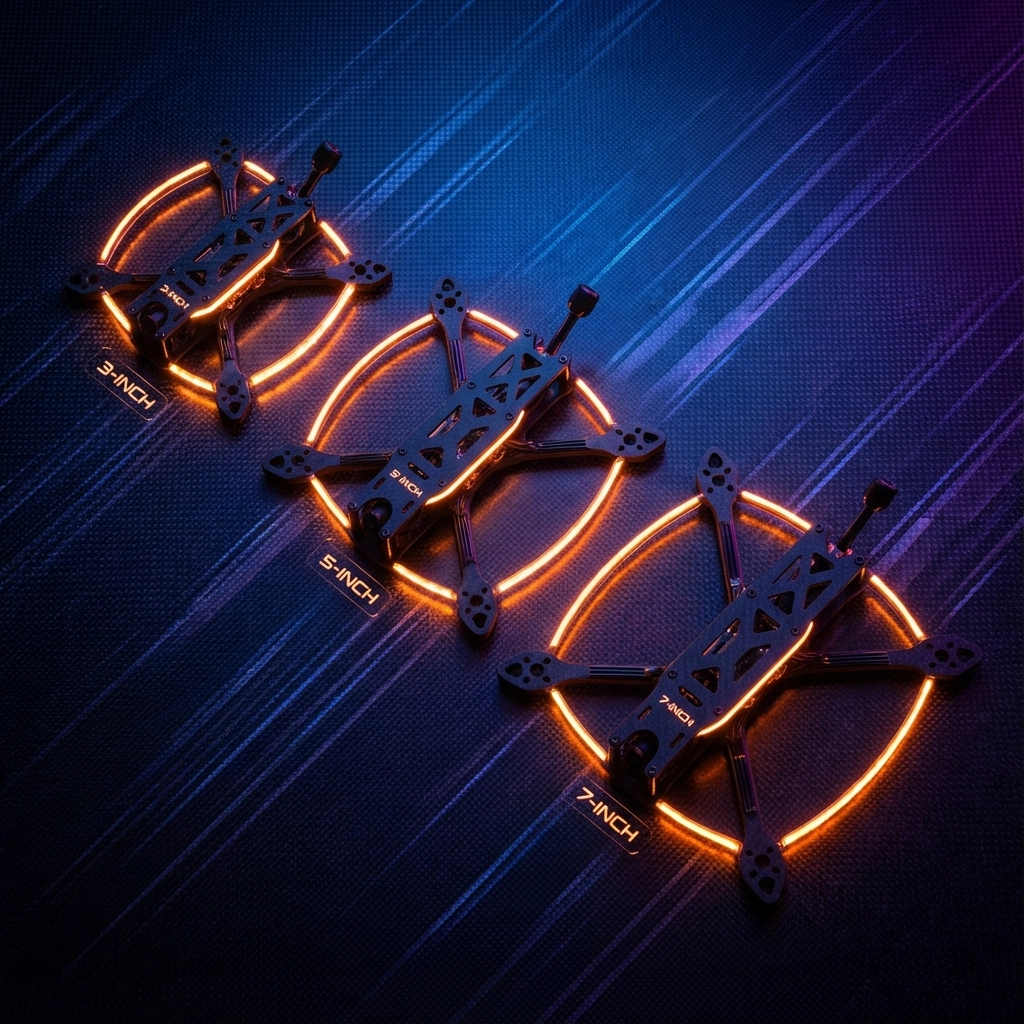
3-Inch Frames: Indoor-friendly, quieter, perfect for learning basic maneuvers in tight spaces. Great for apartment dwellers or those with limited outdoor access.
5-Inch Frames: The sweet spot for most pilots. Fast enough for racing, stable enough for cinematic work, and parts are widely available and affordable.
7-Inch Frames: Long-range exploration machines. Higher top speeds and better wind resistance, but require more space and experience.
Pro tip: Start with a 5-inch frame. It's the Honda Civic of FPV drones : reliable, parts are everywhere, and it'll grow with your skills.
Motor Specifications Decoded
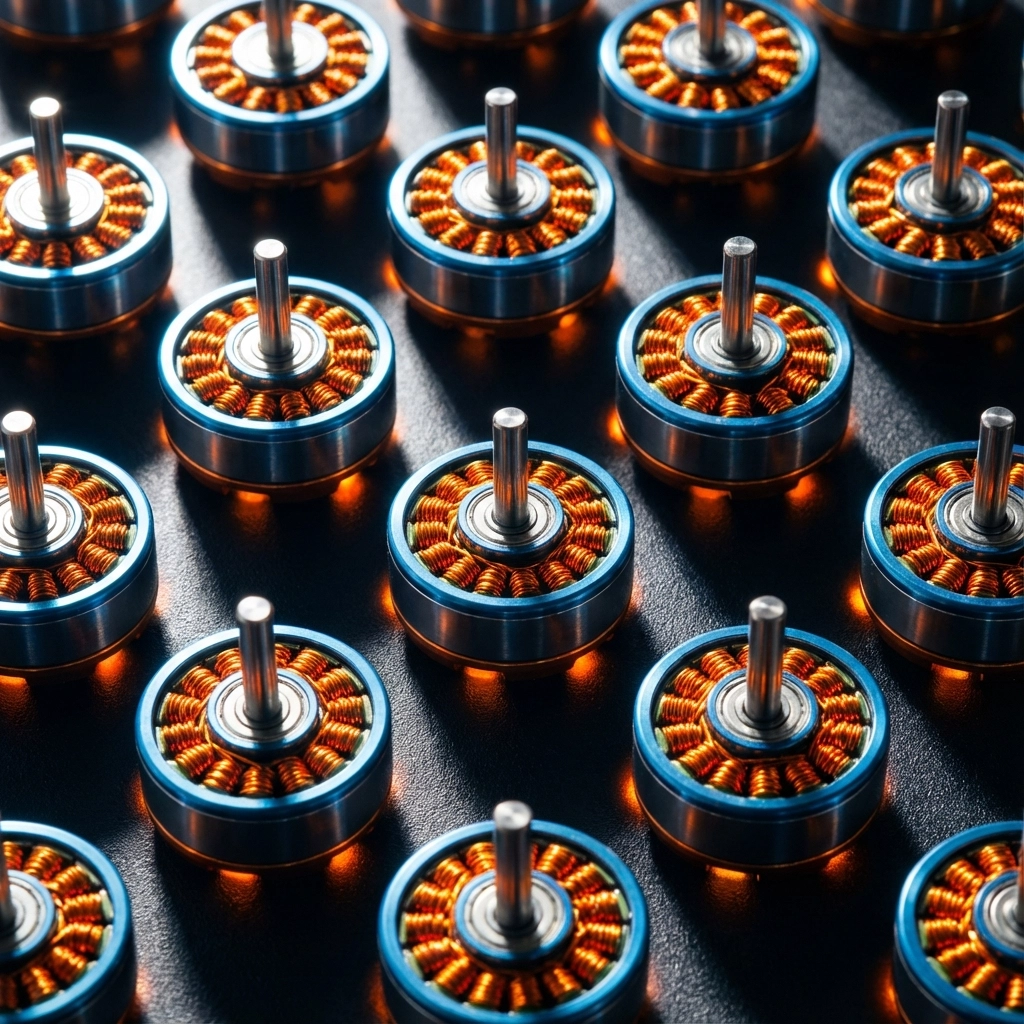
Motor specs look intimidating, but they follow a simple pattern: XXYY format.
- XX: Stator width in millimeters
- YY: Stator height in millimeters
For example, a 2207 motor has a 22mm wide, 7mm tall stator.
Beginner-friendly motor ranges:
- 2204-2207: Good balance of power and efficiency for 5-inch props
- 1404-1507: Perfect for smaller 3-4 inch builds
- 2306-2308: More aggressive power for racing applications
KV rating indicates how many RPMs per volt the motor will spin. Lower KV (1600-1800) provides more torque and efficiency with larger props. Higher KV (2300-2600) spins faster with smaller props but consumes more power.
Flight Controller: Your Drone's Brain
Modern flight controllers run Betaflight firmware : the gold standard for FPV flight. Look for these essential features:
- F4 or F7 processor: Handles complex calculations smoothly
- Built-in OSD: Overlays flight data on your FPV feed
- Blackbox logging: Records flight data for performance tuning
- Multiple UART ports: Connects additional accessories
Popular beginner-friendly flight controllers include the Matek F405 series and SpeedyBee F4/F7 boards. These offer excellent documentation and community support.
The Hidden Costs: What's NOT in Most Kits
Here's where beginners get surprised. Even "complete" kits often exclude crucial items:
Immediate Necessities
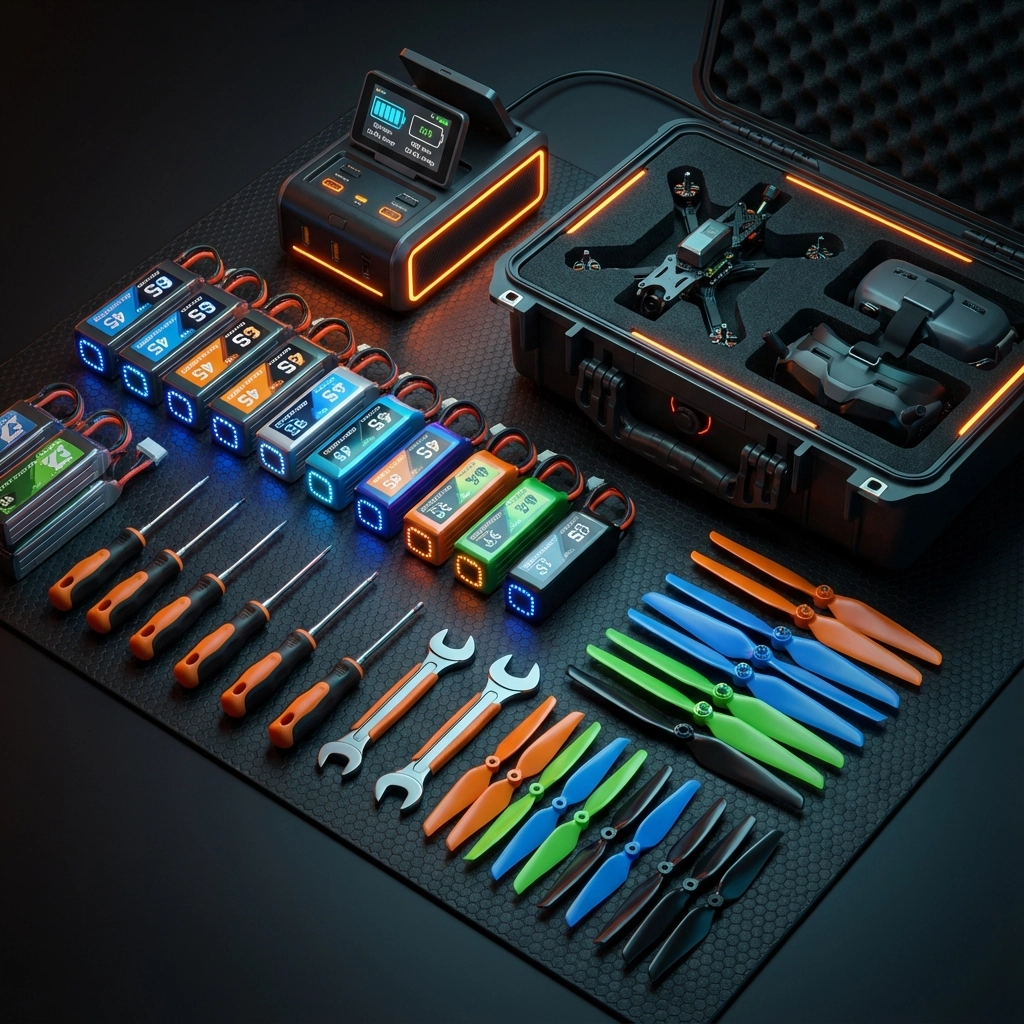
- Extra batteries: Plan for 3-5 flight packs minimum
- Battery charger: Many kits include basic USB chargers that take forever
- Tools: Hex drivers, prop pullers, soldering iron for repairs
- Spare propellers: You WILL break props learning
Near-Future Needs
- Upgraded FPV goggles: Kit goggles often have poor screens or latency
- Better radio transmitter: Entry-level controllers lack advanced features
- Field charging solution: Car chargers or portable power stations
- Transport case: Protect your investment during travel
At TechInMotion360.org, we've seen too many enthusiastic beginners get discouraged by unexpected costs. Our FPV Drone Support Packages include consultation to help you budget correctly from day one.
Avoiding Compatibility Nightmares
Nothing kills enthusiasm faster than ordering components that don't work together. Here are the critical compatibility checkpoints:
Radio Protocol Matching
Your radio transmitter and receiver must speak the same language. Popular protocols include:
- FrSky ACCST/ACCESS: Reliable, long-range
- Spektrum DSMX: Rock-solid connection, popular in racing
- TBS Crossfire/ELRS: Long-range systems for exploration flying
Video System Compatibility
FPV video operates on specific frequencies:
- 5.8GHz: Most common, good range and penetration
- 2.4GHz/1.3GHz: Longer range but require larger antennas
- Digital systems: DJI Digital FPV offers HD video but costs more
Power System Matching
Your battery voltage must match your components:
- 3S (11.1V): Smaller, efficient builds
- 4S (14.8V): Most popular for 5-inch racing quads
- 6S (22.2V): High-performance applications
Our Top Beginner Kit Recommendations
Based on supporting hundreds of new pilots, here are our proven winners:
Budget Champion: BetaFPV Cetus X Kit ($299)
Complete RTF package perfect for learning. Includes everything needed for immediate flight, durable design handles crashes well, and excellent customer support.
Best Value: EMAX Tinyhawk III RTF Kit ($269)
Outstanding indoor/outdoor performance, quality components that last, and active community support for troubleshooting.
Premium Pick: DJI Avata 2 ($769)
Safest learning platform with obstacle avoidance, incredible 4K video quality, and easiest controls for beginners. Higher cost but lowest frustration factor.
DIY Option: Custom 5" Build with Support ($400-600)
Our drone components selection helps you build a personalized setup that grows with your skills.
The TechInMotion360 Advantage
Choosing your first FPV drone shouldn't feel like gambling. At TechInMotion360.org, we eliminate the guesswork with:
- Pre-flight consultations: Understand your goals and match them with the right equipment
- Complete compatibility checking: Every component verified to work together perfectly
- Basic support packages: Get unstuck fast when issues arise
- Flight-ready services: We'll tune and test your setup before you fly
Your Journey Starts with One Decision
The perfect FPV drone doesn't exist : but the perfect FPV drone for you absolutely does. Whether you choose a ready-to-fly kit for immediate gratification or embrace the learning journey of building your own, the most important step is the first one.
Don't let analysis paralysis keep you grounded. Every professional FPV pilot started exactly where you are now, staring at component lists and wondering if they're making the right choice.
Remember: Your first drone won't be your last drone. That's not failure : that's progression. Start with something that gets you flying safely and affordably, then let your growing skills and interests guide your next upgrade.
Ready to transform from spectator to pilot? The sky is calling, and we're here to make sure you answer with confidence.
Need help choosing the perfect setup for your specific situation? Our team at TechInMotion360.org offers personalized consultations to match you with equipment that fits your goals, budget, and skill level. Because the best drone is the one that gets you flying.
Leave a comment