
You're standing outside a million-dollar listing, drone in hand, ready to capture footage that'll make potential buyers feel like they're already home. But here's the question that's probably keeping you up at night: should you be flying a Cinewhoop or a traditional FPV drone?
The answer isn't just about specs and speed: it's about understanding what real estate clients actually want and which drone delivers those cinematic shots that turn listings into sold signs.
Understanding the Two Contenders
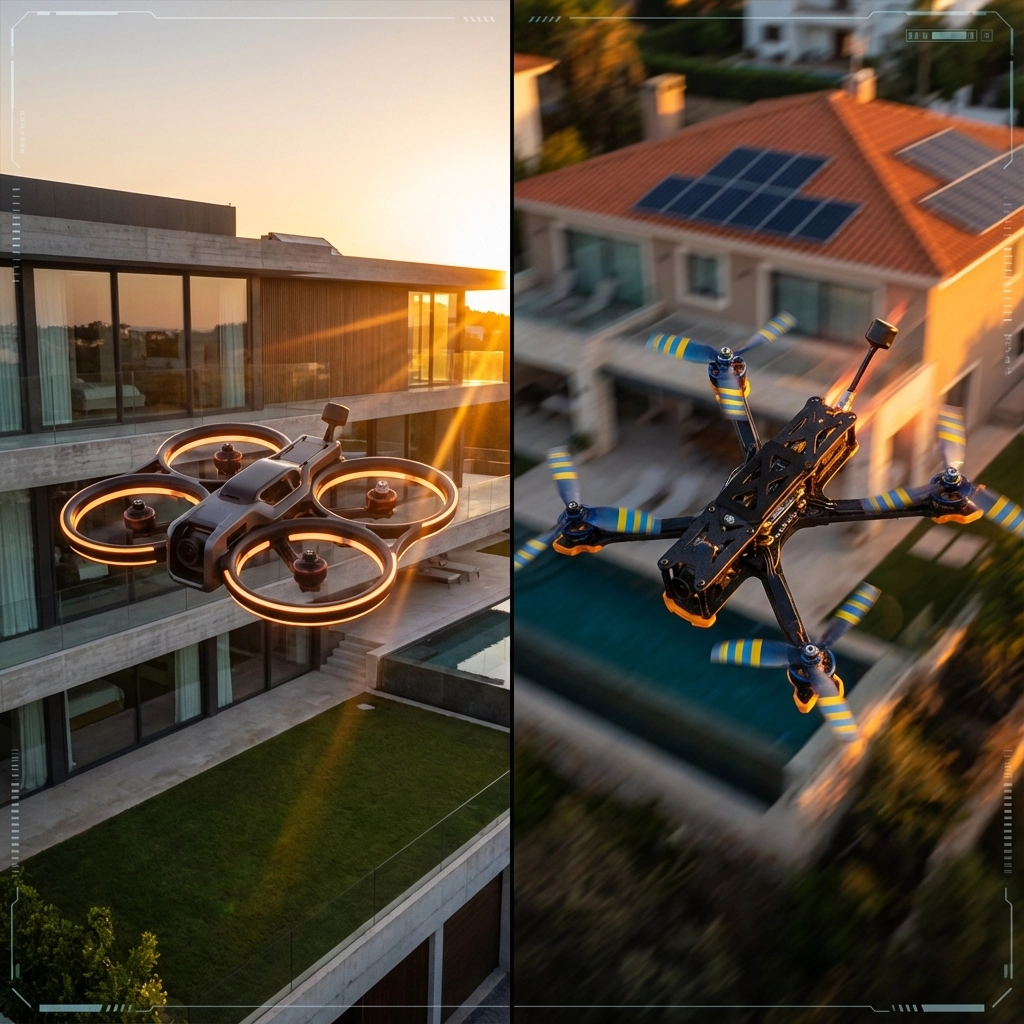
Cinewhoops are the smooth operators of the FPV world. Think of them as the luxury sedans: they've got propeller guards (called ducts), prioritize stability over speed, and are designed specifically for capturing buttery-smooth cinematic drone videography. They typically cruise at 30-60 km/h and can safely navigate tight spaces without turning your client's chandelier into confetti.
Traditional FPV drones (usually 5-inch freestyle quads) are the sports cars. They're built for speed, agility, and those jaw-dropping acrobatic moves you see on YouTube. They can hit much higher speeds but lack the propeller guards and stability features that make Cinewhoops so appealing for professional work.
What Real Estate Videography Actually Demands
Before we crown a winner, let's talk about what aerial real estate marketing actually requires. Your clients aren't looking for barrel rolls and power loops: they want footage that makes viewers imagine Sunday morning coffee in that kitchen or hosting dinner parties on that deck.
Real estate fly-throughs need:
- Smooth, stable footage that doesn't make viewers seasick
- Safety around people and property (because insurance claims are nobody's friend)
- Precise control in tight spaces for those dramatic hallway reveals
- Professional image quality that screams "premium listing"
- Reliability because you can't ask the homeowner to move out again for a reshoot
Why Cinewhoops Dominate Real Estate Work
Here's where Cinewhoops really shine for fpv drone services in the real estate space.
Safety First, Always
Those propeller guards aren't just for show: they're your insurance policy. When you're flying through a $2 million home with original hardwood floors and custom millwork, the last thing you want is an unprotected prop slicing through someone's family heirloom. Cinewhoops let you get close to architectural details without the anxiety.
Cinematic Stability
Cinewhoops are engineered for smooth, controlled movements. While traditional FPV drones excel at rapid direction changes, Cinewhoops deliver the kind of floating, ethereal movement that makes potential buyers think "I could live here." That slow reveal as you glide through the front door? Pure Cinewhoop magic.
Indoor Navigation Masters
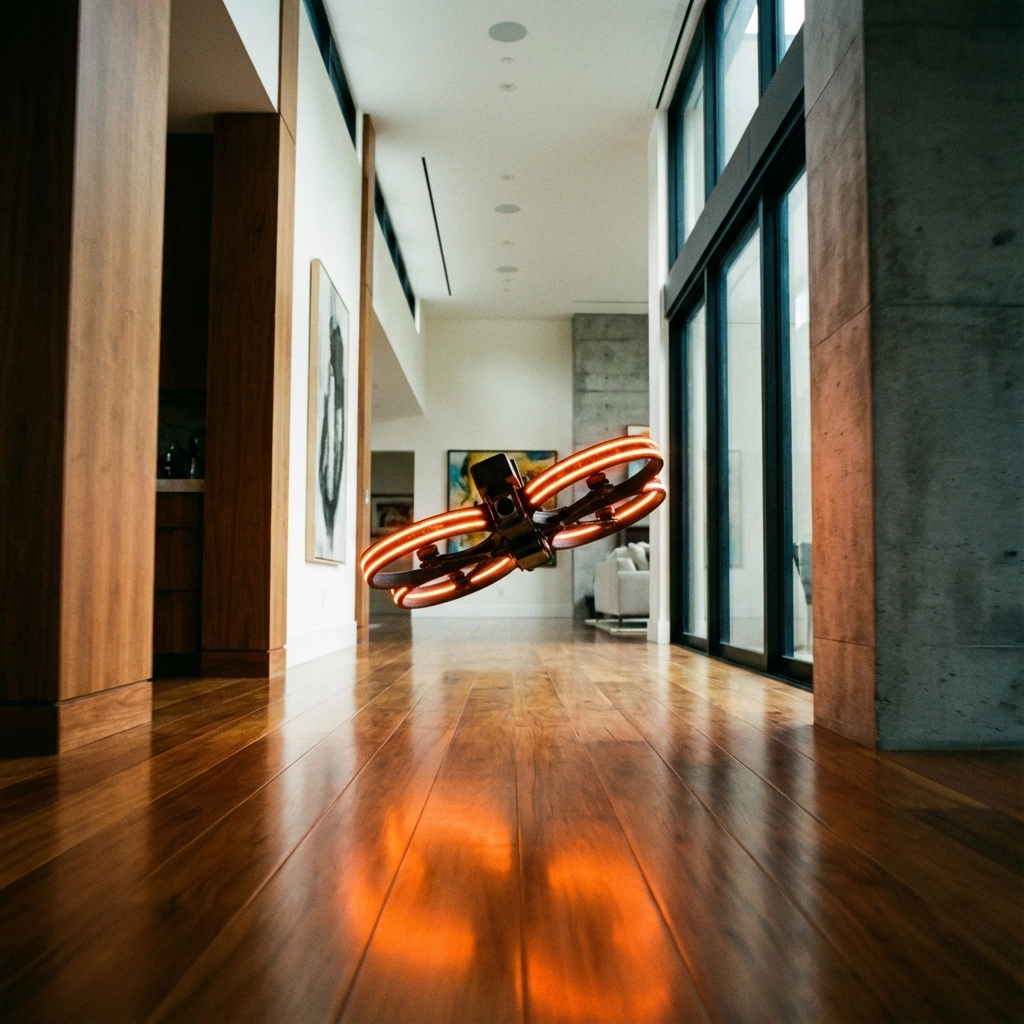
Real estate isn't just about exterior shots anymore. Today's buyers want to experience the flow of a home, and that means navigating hallways, staircases, and rooms with varying ceiling heights. Cinewhoops' compact size and protected props make them ideal for these tight-space operations.
Where Traditional FPV Still Has Its Place
Don't count out traditional FPV drones entirely. They bring some serious advantages to specific real estate scenarios.
Speed and Efficiency
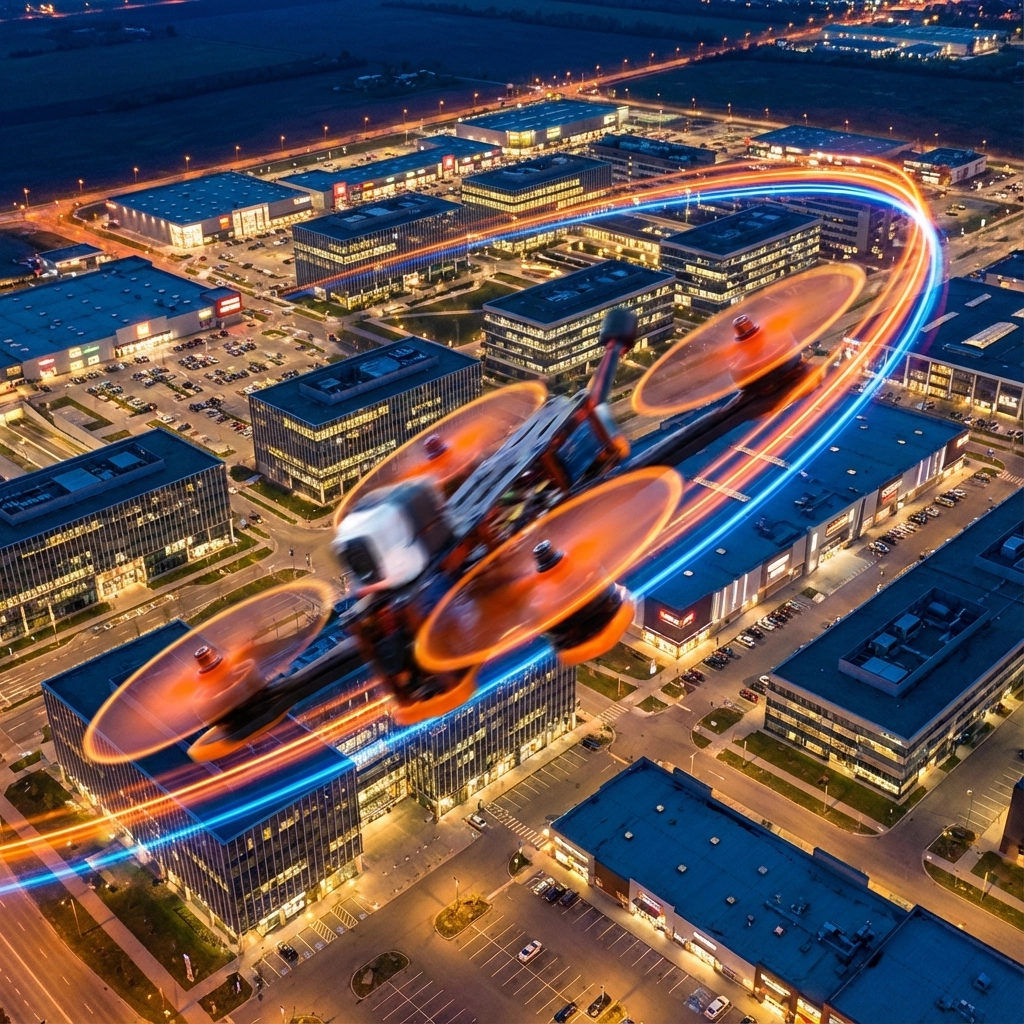
When you're shooting large commercial properties or expansive estates, traditional FPV drones can cover more ground faster. Their agility makes them perfect for those sweeping establishing shots that show the full scope of a property.
Dynamic Outdoor Sequences
For properties with significant outdoor features: think vineyards, horse farms, or waterfront estates: traditional FPV drones can capture more dynamic footage. They can quickly transition from ground-level shots to high aerial views, creating more engaging sequences.
Wind Resistance
Traditional FPV drones typically handle windy conditions better than Cinewhoops. If you're shooting coastal properties or high-rise buildings where wind is a factor, the extra power and streamlined design of traditional FPV can be crucial.
Matching Drone Type to Property Type
Urban Condos and Townhomes: Cinewhoop wins hands down. These properties require precise indoor navigation and smooth transitions between small spaces.
Suburban Single-Family Homes: Cinewhoop again. The combination of indoor/outdoor filming and need for safety around families makes this a no-brainer.
Luxury Estates: This is where it gets interesting. You might actually want both: Cinewhoop for the intimate interior tours and traditional FPV for those dramatic establishing shots of the entire property.
Commercial Properties: Traditional FPV often takes the lead here. Large warehouses, office buildings, and retail spaces benefit from the speed and dynamic range of traditional quads.
Vacant Land and Development Sites: Traditional FPV is your go-to. You need to cover large areas quickly and show topography and access points efficiently.
The Technical Reality Check
Let's talk about the elephant in the room: flight time. Cinewhoops typically get shorter flight times due to the extra drag and weight of those propeller guards. You're looking at maybe 3-5 minutes of filming time per battery versus 5-7 minutes with traditional FPV.
But here's the thing: real estate shoots are rarely about marathon flying sessions. They're about precise, planned shots. Most professional real estate videographers plan their shots in advance and execute them efficiently. The shorter flight time becomes less of an issue when you know exactly what you're trying to capture.
Cost and Investment Considerations
Cinewhoops generally cost less to get into than high-performance traditional FPV setups. They're also less likely to result in expensive crashes during your learning phase. When you're building a business around fpv drone services, minimizing risk while maximizing quality output is crucial.
Traditional FPV drones might require more investment in spare parts and repairs, especially as you're learning. But they also offer more versatility if you plan to expand beyond real estate into other types of aerial videography.
Making the Choice for Your Business
If you're just starting in real estate videography, a quality Cinewhoop is probably your best first investment. It'll handle 90% of your real estate needs while keeping you (and your clients' properties) safe as you build your skills.
For established operators looking to expand capabilities, adding a traditional FPV drone to complement your Cinewhoop setup gives you the flexibility to handle any property type that comes your way.
Ready to Elevate Your Real Estate Game?
The drone you choose isn't just about specs: it's about building a reputation for delivering the kind of footage that turns browsers into buyers. Whether you're team Cinewhoop or ready to master both platforms, the key is understanding that great aerial real estate marketing comes from knowing your tools and using them strategically.
Ready to gear up with the right equipment for your real estate videography business? Check out our selection of professional FPV drones and components designed specifically for commercial applications. From beginner-friendly Cinewhoops to advanced FPV setups, we've got the gear you need to make every listing look like a million bucks.
Because at the end of the day, the best drone is the one that helps you capture the shot that sells the house.
Leave a comment