
There’s nothing worse than watching smoke curl up from your quad mid-flight. One second you’re ripping through a gap, the next you’re walking through a field looking for your downed drone with a fried motor. Been there. Done that. Got the singed fingerprints to prove it.
Motor burnout isn’t random bad luck: it’s almost always the result of a mismatch somewhere in your build. Wrong KV for your props. Undersized stator for your frame. Cheap windings that can’t handle the heat. The good news? Once you understand what makes motors fail, you can avoid it entirely.
Let’s break down everything you need to know about choosing FPV motors that’ll last.
Understanding Motor Sizing: Those Four Numbers Matter
Every brushless motor has a four-digit designation like 2207 or 1404. These aren’t random: they tell you exactly what you’re working with.
The first two digits represent the stator diameter in millimeters. The last two digits indicate the stator height. A 2207 motor has a 22mm diameter stator that’s 7mm tall.
Why does this matter? Stator volume directly correlates with torque and power handling. Bigger stators can push bigger props and dissipate more heat. Smaller stators are lighter but work harder on aggressive setups.
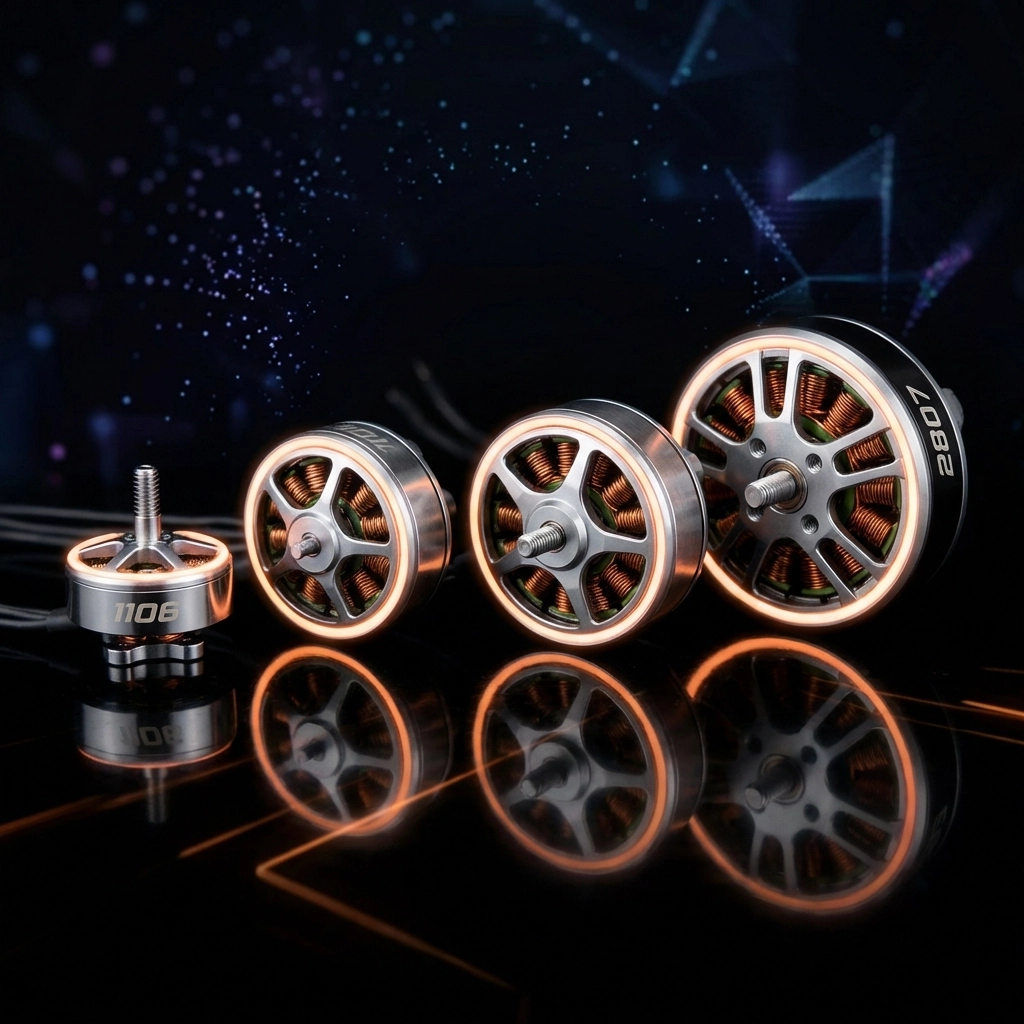
Here’s the general breakdown:
- 1103/1106/1507 motors : Perfect for 2-3 inch micro builds
- 1804/2004 motors : Great for 3-4 inch lightweight rigs
- 2206/2207/2306 motors : The sweet spot for 5-inch freestyle and racing
- 2507/2807 motors : Built for 6-7 inch long-range and cinematic rigs
Slapping 2207 motors on a 3-inch frame? You’re carrying unnecessary weight. Running 1507 motors on a 5-inch freestyle build? You’re asking for thermal failure. Match your motors to your frame size, period.
KV Ratings: The Speed vs. Efficiency Tradeoff
KV tells you how many revolutions per minute a motor spins per volt applied. A 2400KV motor on a 4S battery (14.8V nominal) theoretically spins at 35,520 RPM unloaded.
But here’s where pilots get into trouble: higher KV doesn’t automatically mean faster.
Higher KV motors spin faster but produce less torque. They’re designed for smaller props where you need RPM to generate thrust. Lower KV motors spin slower but with more grunt: perfect for swinging larger props efficiently.
The golden rules:
- 2300-2700KV : Standard for 5-inch builds on 4S batteries
- 1700-1950KV : Ideal for 5-inch builds on 6S batteries
- 2800-4000KV : Designed for micro quads with 2-3 inch props
Running high-KV motors with oversized props forces the motor to work against its design. The windings overheat. The bearings wear faster. Eventually, something gives.
If you’re unsure which direction to go with your power system, the team at TechInMotion360 offers a dedicated Power System Upgrade Package that takes the guesswork out of matching motors, ESCs, and batteries.
Battery Voltage: The Foundation of Your Power System
Your battery voltage determines everything downstream. Motors are rated for specific voltage ranges, and exceeding them is a fast track to failure.
- 4S (14.8V) : The traditional standard for 5-inch FPV
- 6S (22.2V) : Increasingly popular for smoother throttle response and efficiency
- 3S and below : Typically reserved for micros and cinewhoops
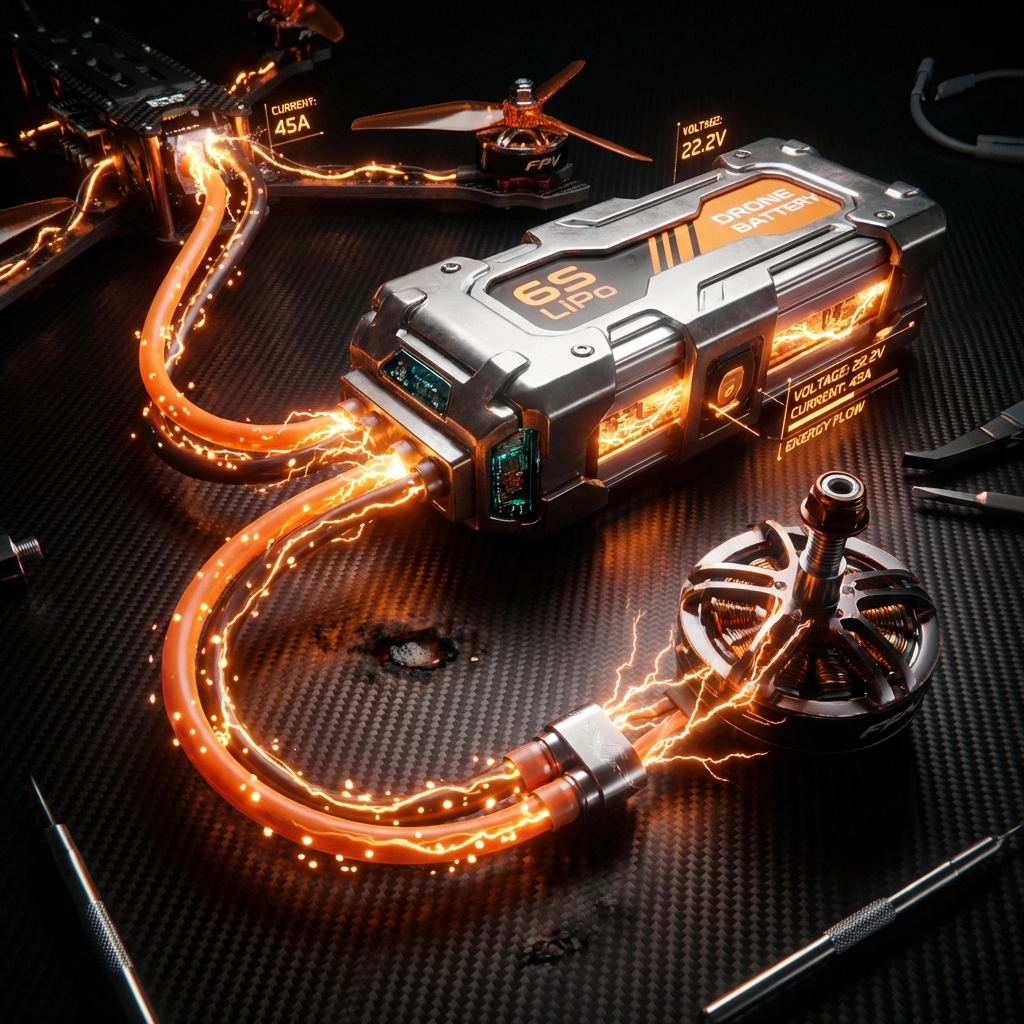
Here’s the thing: a 6S setup with appropriate low-KV motors often runs cooler than an equivalent 4S high-KV setup. Why? Because lower KV motors draw less current to achieve the same thrust. Less current means less heat in your windings and ESCs.
If you’re considering making the jump to 6S or want to optimize your current voltage setup, a Performance Tune & Troubleshoot session can help dial in your PIDs and motor timing for maximum efficiency.
Prop Size: The Partner Your Motor Needs
Motors and props are dance partners. The wrong pairing steps on toes.
Propeller size affects the load your motor sees. Longer props and higher pitch create more air resistance, demanding more torque. If your motor can’t deliver that torque efficiently, it compensates by drawing excessive current: and generating destructive heat.
General prop-to-motor guidelines:
| Frame Size | Prop Size | Recommended Motors |
|---|---|---|
| 3 inch | 3″ props | 1306-1507 |
| 4 inch | 4″ props | 1806-2004 |
| 5 inch | 5″ props | 2206-2306 |
| 6 inch | 6″ props | 2407-2507 |
| 7 inch | 7″ props | 2507-2807 |
Running aggressive bi-blade props? Your motors work less hard than with tri-blades. Pushing high-pitch props for top speed? Expect higher motor temperatures. It’s all about balance.
Flying Style: Match Your Motors to Your Mission
A freestyle pilot and a long-range cruiser have completely different motor needs: even on identical frames.
Freestyle and Racing:
You need motors that handle rapid throttle changes, recover quickly from prop wash, and survive crashes. Look for:
- Higher torque (larger stator height)
- Quality bearings rated for impact
- Reinforced windings
Cinematic and Long-Range:
Efficiency trumps raw power. You want motors that sip current and stay cool during extended flights:
- Lower KV ratings
- Optimized for specific prop sizes
- Excellent grams-per-watt efficiency ratings
Cinewhoops:
These ducted builds need motors that perform well in prop guards without overheating:
- Mid-range KV
- Designed for restricted airflow conditions
- Often 1404 or 1507 sizes

Cheap Motors vs. Quality Motors: You Get What You Pay For
Let’s be real: budget motors are tempting. Twenty bucks for a set of four? Sounds great until you’re replacing them every few weeks.
Here’s what separates quality motors from cheap knockoffs:
Windings: Premium motors use precision-wound copper with proper insulation. Cheap motors often have sloppy windings that create hot spots and short out under stress.
Bearings: Good motors run smooth, quiet bearings rated for the RPMs and impacts of FPV flying. Budget bearings develop play quickly and create vibration that destroys flight footage.
Magnets: Higher-grade magnets (N52 vs N48) deliver better performance per gram and resist demagnetization from heat.
Quality Control: Reputable manufacturers test motors before shipping. Budget brands often skip this step, leaving you with units that vary wildly in performance.
Investing in quality motors isn’t just about performance: it’s about reliability. When you’re flying over water, through gaps, or capturing client footage, you need equipment you can trust.
For ongoing peace of mind, TechInMotion360’s Annual Remote Support Plan keeps your entire rig optimized throughout the year.
Signs Your Motors Are Struggling
Catch problems before they become failures:
- Excessive heat after short flights : Your motors are working too hard
- Unusual sounds : Grinding or clicking indicates bearing issues
- Reduced throttle response : Could signal demagnetization or winding damage
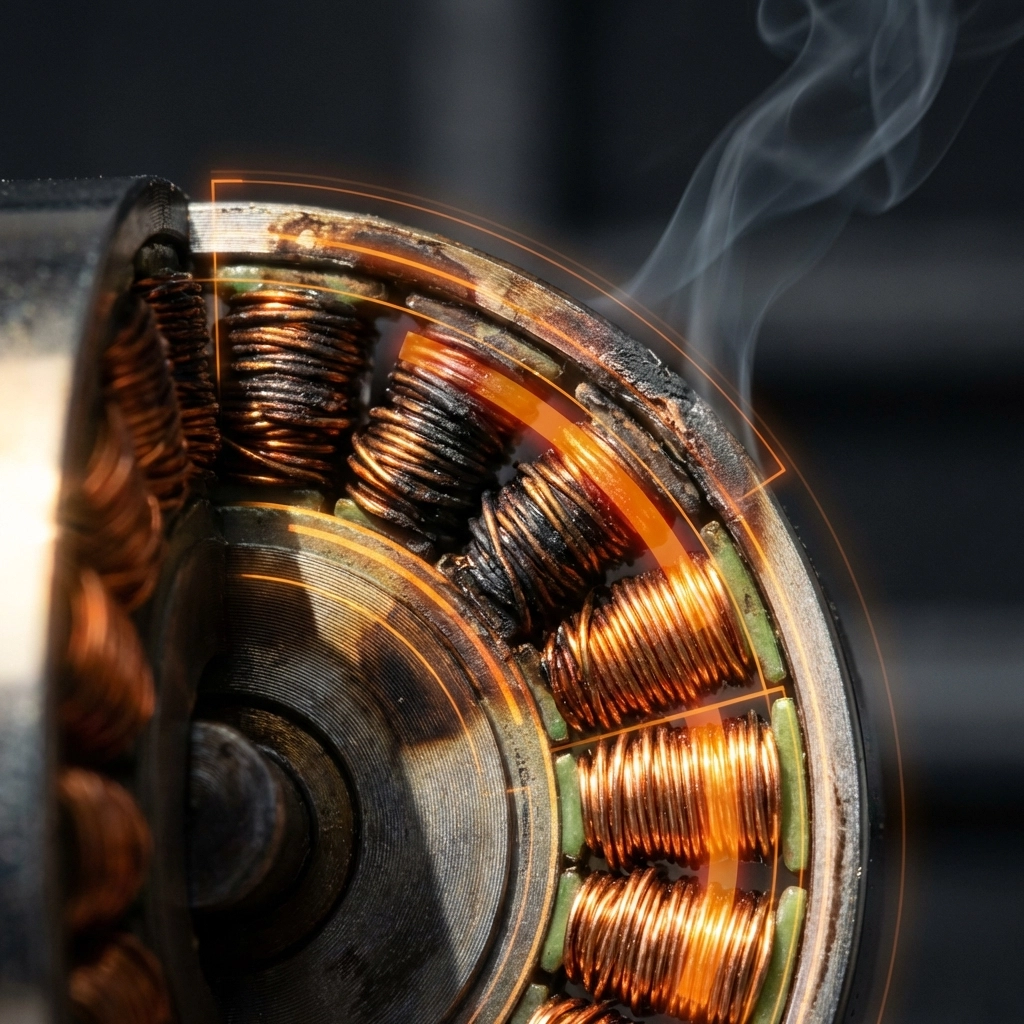
- Visible discoloration : Brown or blackened windings mean thermal damage has occurred
- Motor oscillations : Often a sign of bearing play or imbalanced bells
Regular maintenance extends motor life significantly. A Basic Maintenance & Repair session can identify worn components before they leave you stranded in a field.
Putting It All Together
Choosing the right FPV motors comes down to matching four key variables:
- Frame size dictates motor size
- Battery voltage determines KV range
- Prop size must match motor capability
- Flying style guides your priorities
Get these right, and your motors will run cool, last long, and deliver consistent performance flight after flight.
Get them wrong, and you’ll keep chasing mysterious burnouts, wondering why your quad can’t stay in the air.
The difference between a frustrating hobby and a rewarding passion often comes down to these foundational choices. Take the time to understand your power system, invest in quality components, and don’t be afraid to ask for help when you need it.
Ready to build a rig that performs? Check out the full range of support options at TechInMotion360 and fly with confidence.
Leave a comment