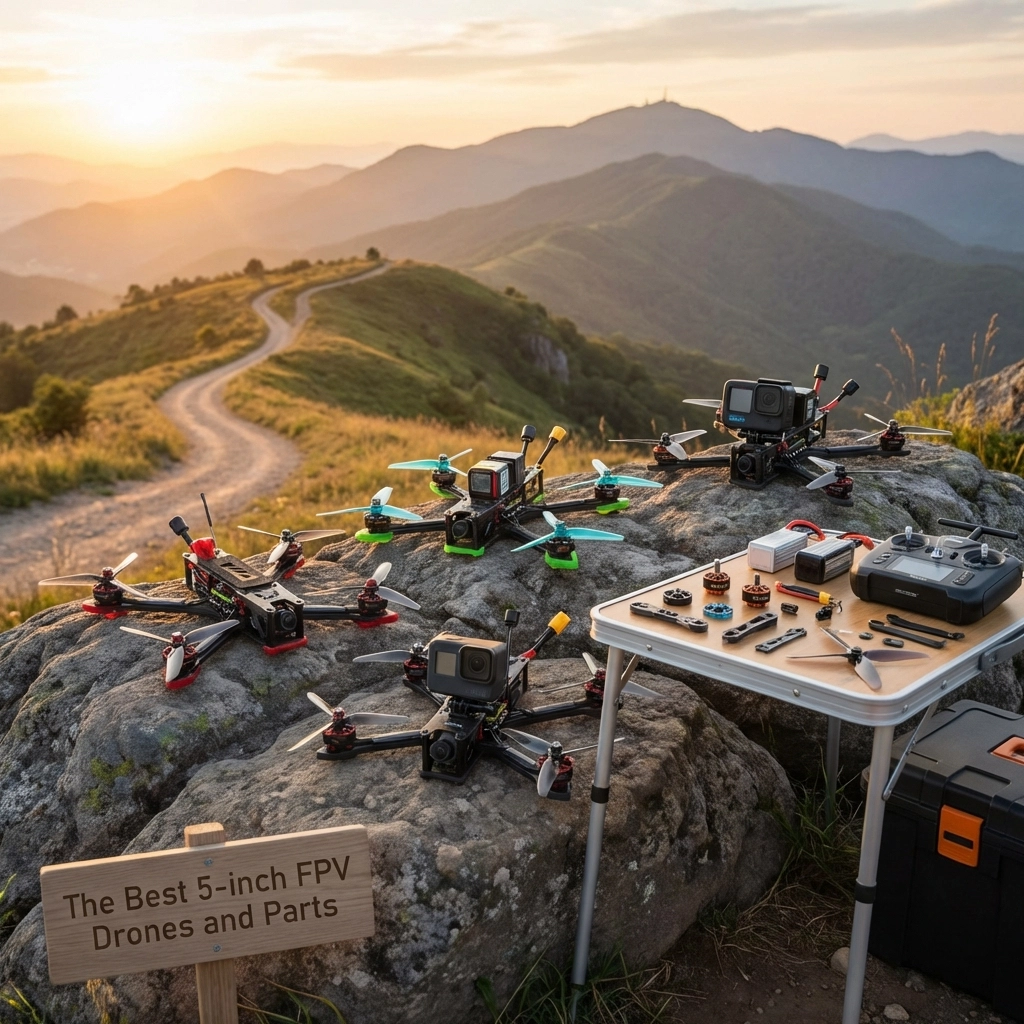
Why 5-Inch FPV Drones Are the Sweet Spot
If you’re diving into the world of FPV drones, you’ve probably noticed that 5-inch quads dominate the scene. There’s a good reason for that: they hit the perfect balance between power, agility, and versatility.
Five-inch drones are large enough to carry quality cameras and punch through wind, yet nimble enough for tight freestyle maneuvers and racing. They’re the jack-of-all-trades in the FPV world, which is exactly why most pilots: from beginners to pros: build or buy in this class.
Whether you’re chasing cinematic footage, ripping through bandos, or just learning the ropes, a 5-inch setup gives you room to grow without outgrowing your gear. In this guide, we’ll move from prebuilt BNF options into frames, FC/ESC stacks, motors, propellers, batteries, accessories (with GPS and beeper), FPV camera/VTX/antennas, and the tools and wires that tie it all together.
Prebuilt 5-inch FPV Drone (BNF)
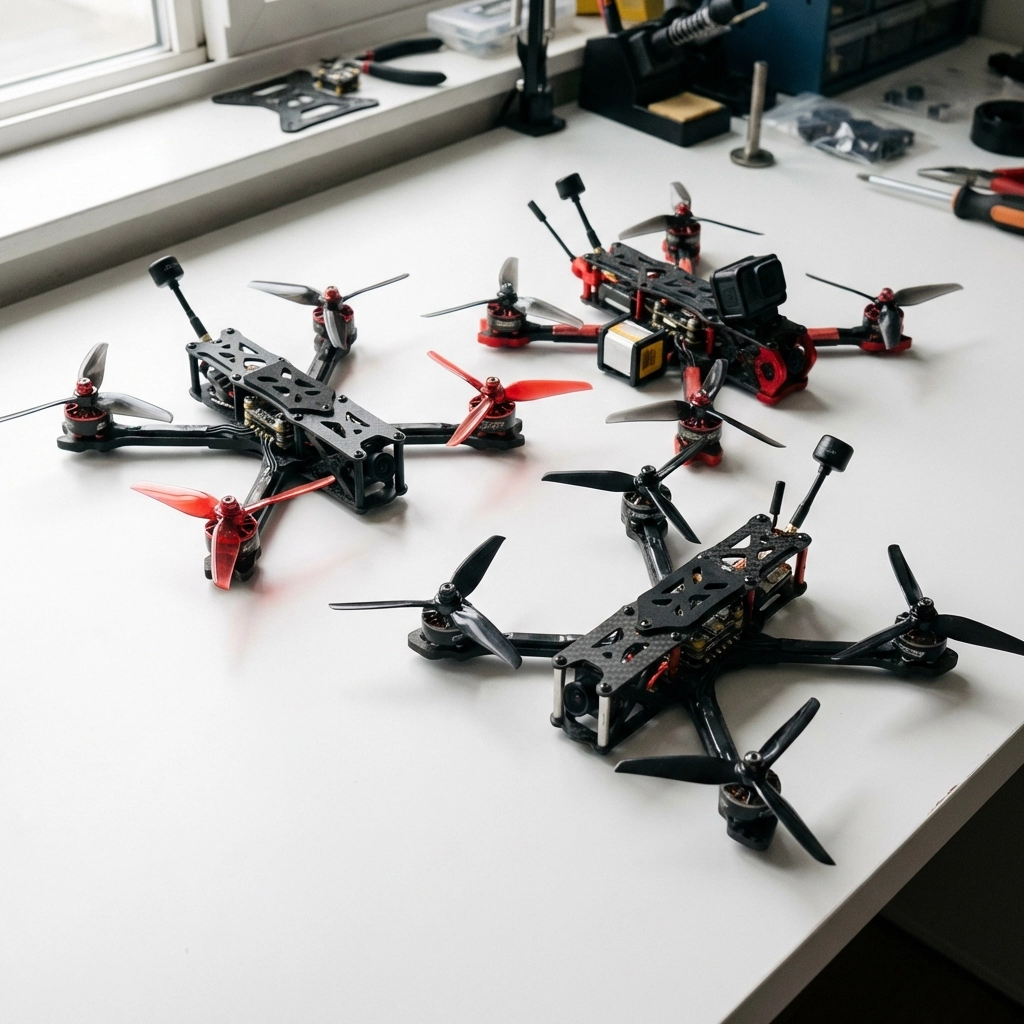
Not everyone wants to build from scratch: and that’s totally fine. Bind-N-Fly (BNF) drones come fully assembled and tested. You just bind them to your radio and goggles, and you’re in the air.
Premium Performance Picks
For pilots who want top-tier flight characteristics right out of the box, look for BNF options featuring robust ESCs, reliable flight controllers, and powerful motors. Many premium models now ship with DJI O3 or O4 digital systems, giving you crystal-clear video transmission from day one.
These quads typically offer smooth, locked-in flight characteristics that inspire confidence whether you’re a beginner or seasoned ripper.
Budget-Friendly Options
If you’re just starting out or want a solid beater quad, there are excellent budget options featuring F7 processors and open frame designs for easy maintenance. These drones deliver responsive flight at a fraction of the premium price, making them ideal for learning without the financial stress of crashing expensive gear.
Analog vs Digital
Quick note: analog BNF models often provide better value since you avoid “prop in view” issues that sometimes plague digital camera placements. However, if you’re committed to digital long-term, starting with a digital BNF can save you upgrade costs later.
Frame
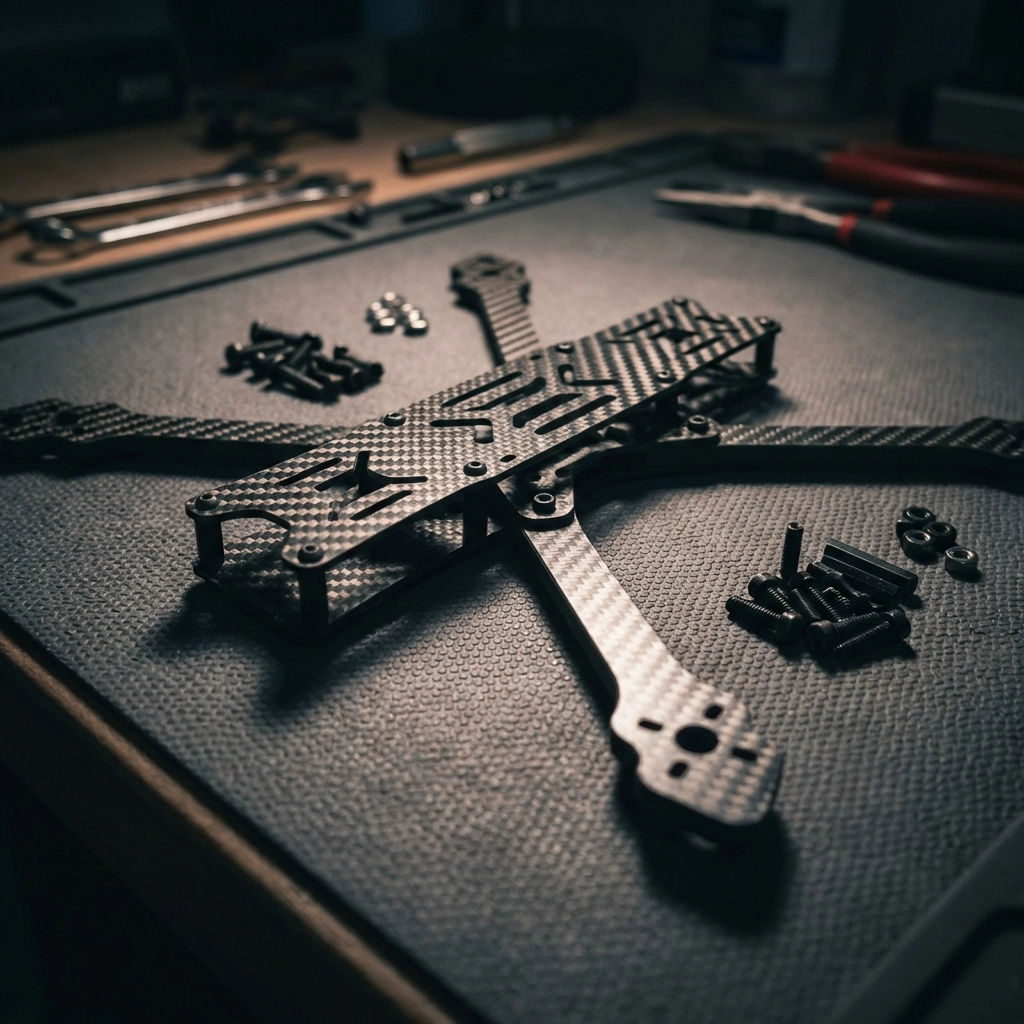
Your frame is literally what holds everything together. For 5-inch builds, you want carbon fiber construction that’s durable without adding unnecessary weight.
What to Look For
- Carbon thickness: 4mm-5mm arms are standard for freestyle; thinner arms save weight but sacrifice durability
- Mounting patterns: Ensure compatibility with your chosen stack and VTX
- Wire management: Look for thoughtful routing channels and mounting options
- Repairability: Can you replace individual arms, or do you need a whole new frame after a crash?
Popular Frame Styles
True-X frames offer balanced flight characteristics and are forgiving for beginners. Stretched-X frames push the rear motors back for better camera angles and slightly different handling. Deadcat frames keep props out of your camera view entirely.
Pick a frame that matches your flying style and accommodates your preferred video system: especially if you’re running DJI units that need specific mounting configurations.
FC and ESC
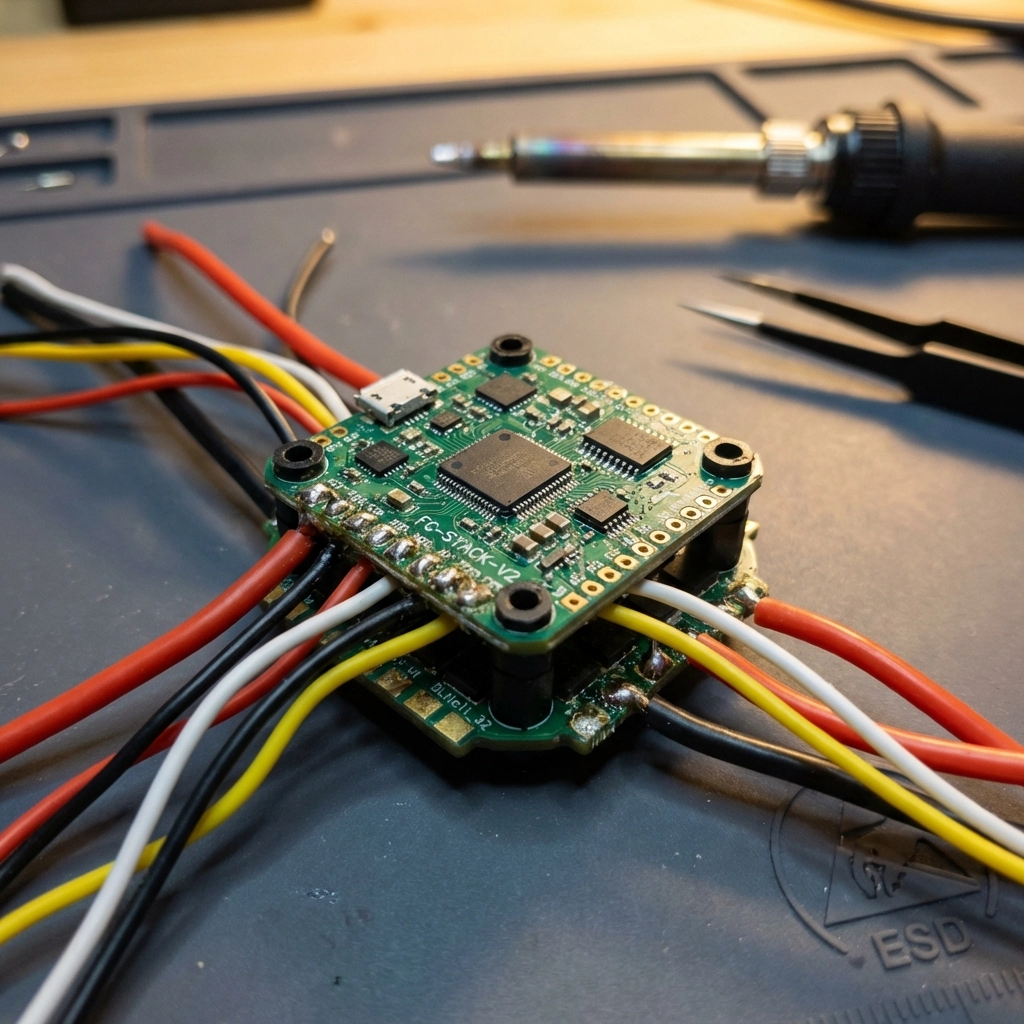
The flight controller (FC) is your drone’s brain, while the electronic speed controller (ESC) manages motor power. Most builders opt for “stacks”: FC and ESC boards designed to mount together.
Flight Controller Considerations
- Processor: F4 processors are budget-friendly; F7 and H7 offer faster processing and more features
- Gyro quality: Better gyros mean smoother flight and easier tuning
- Connectivity: Ensure compatibility with your radio protocol and GPS if desired
- Betaflight support: Most modern FCs run Betaflight firmware: check for current compatibility
ESC Considerations
- Amperage rating: 45A-55A continuous is standard for 5-inch builds
- BLHeli_32 or AM32 firmware: Enables advanced features like bidirectional DShot
- Quality MOSFETs: Cheap ESCs with weak components are the #1 cause of mid-flight failures
Investing in a quality stack saves headaches. The budget options that combine FC and ESC at competitive prices while maintaining solid build quality are worth considering for most builds.
Motors
Motors determine your drone’s power, efficiency, and flight feel. For 5-inch quads, you’re typically looking at 2306 or 2207 motor sizes.
KV Ratings Explained
- 1700-1800KV: Best for 6S batteries; smoother power delivery, longer flight times
- 2400-2550KV: Best for 4S batteries; snappier response, more affordable batteries
Most pilots are moving toward 6S setups for the efficiency gains and smoother throttle feel, but 4S remains popular for beginners due to lower battery costs.
What Makes a Good Motor
Look for quality bearings, strong magnets, and proven reliability. Motors take serious abuse in crashes, so repairability matters too. Some brands offer replacement bells and shafts, which can save you from buying entirely new motors after a bad hit.
Propellers
Props are your connection to the air: and they’re consumables. You’ll break a lot of them, so buy in bulk.
Prop Styles by Use Case
- Racing props: Aggressive pitch, lighter weight, maximum speed
- Freestyle props: Balanced design, good grip, responsive feel
- Cinematic props: Lower pitch, quieter, smoother footage
For 5-inch builds, you’re looking at props in the 5.1″ to 5.3″ range with varying blade counts (bi-blade for efficiency, tri-blade for grip). Start with tri-blade props: they’re forgiving and versatile.
Batteries
Your battery choice dramatically affects flight time, power delivery, and overall weight.
LiPo vs LiHV
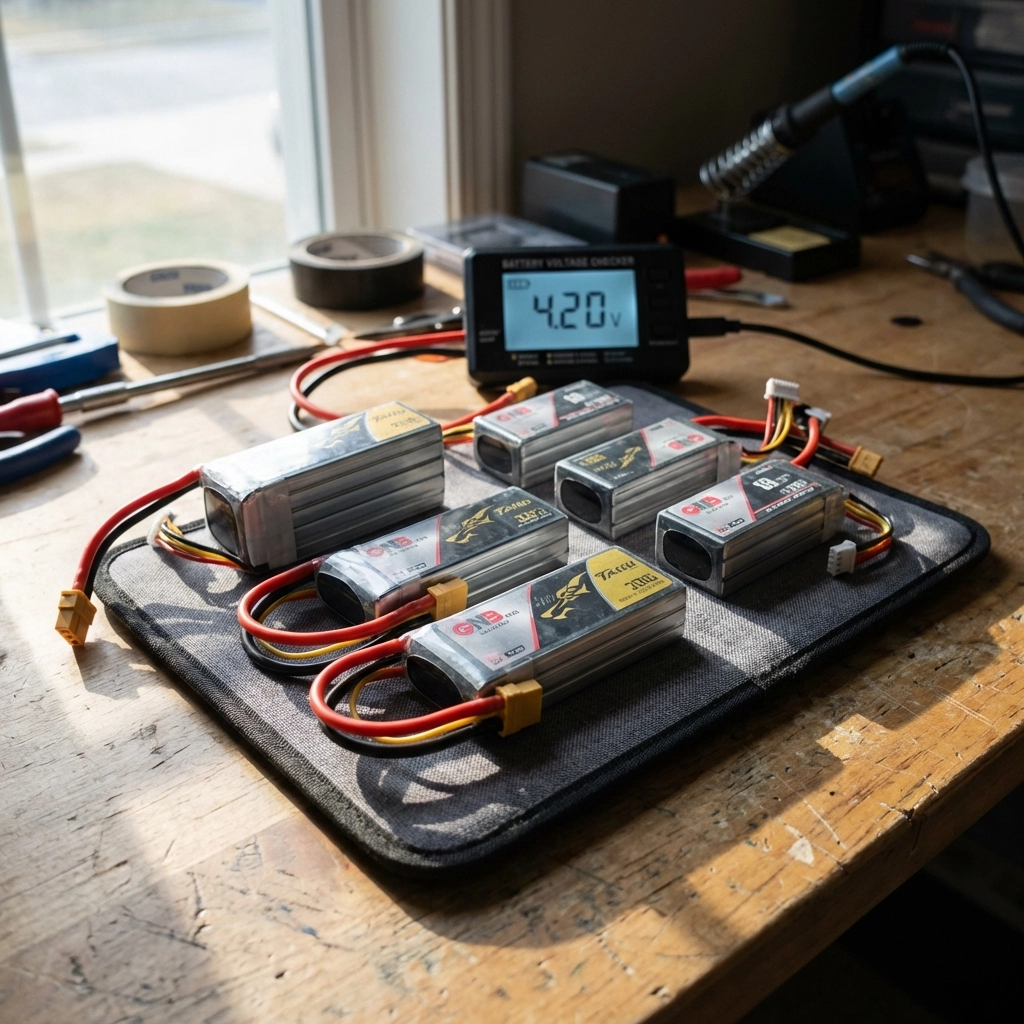
Standard LiPo batteries are the default choice. LiHV (high-voltage) packs charge to 4.35V per cell instead of 4.2V, offering slightly more capacity but potentially shorter lifespan if not handled properly.
Capacity and C-Rating
- 1300-1500mAh: Standard for freestyle and racing; good balance of weight and flight time
- 1800-2200mAh: Extended flight times for cinematic work; heavier
C-rating indicates discharge capability. Higher quality packs maintain voltage better under load, giving you consistent power throughout your flight instead of sagging during hard maneuvers.
Invest in quality batteries: cheap packs with poor energy density and high voltage sag will make even the best drone feel sluggish.
Accessories
GPS
For Return-to-Home functionality and finding crashed quads.
Beeper
Absolutely essential for locating your drone after crashes.
- Action camera mount: If you’re shooting with a GoPro or similar
FPV Camera, VTX, Antennas
Your FPV system is how you see the world from your drone’s perspective.
Digital vs Analog
Digital systems (DJI, Walksnail, HDZero) offer dramatically better image quality and range. Analog is cheaper, has lower latency, and remains popular for racing. For most new pilots, digital is worth the investment.
Antennas Matter
Don’t overlook antenna choice. Quality antennas with proper polarization (RHCP or LHCP: just match your goggles and VTX) significantly improve range and signal penetration.
Tools and Wires
- Hex drivers (1.5mm, 2mm, 2.5mm)
- Soldering iron with fine tip
- Quality solder and flux
- Wire strippers
- Heat shrink tubing
- Zip ties and electrical tape
- Multimeter for testing
Need Help With Your Build?
Building your first 5-inch FPV drone can feel overwhelming, but you don’t have to figure it out alone. TechInMotion360 offers FPV Drone Support Packages to help you through every step: from selecting compatible parts to troubleshooting your Betaflight configuration.
Whether you need help with performance tuning, power system upgrades, or basic maintenance and repair, we’ve got your back.
The 5-inch class is where FPV magic happens. Pick your parts wisely, build with patience, and get ready to experience flight like never before. 🚀
Leave a comment